
Attraction
Rupea Citadel
A Saxon peasant fortress documented as early as 1324 under the name Castrum Kuholm, built on a basalt hill that dominates the town of Rupea, in the northern part of Brașov County. The name derives from the Latin rupes, meaning "rock", a reference to the terrain on which it stands. The complex, organised into three successive courtyards arranged in a spiral along the slope and built between the 13th and 17th centuries, was restored with European funds and reopened in 2013.
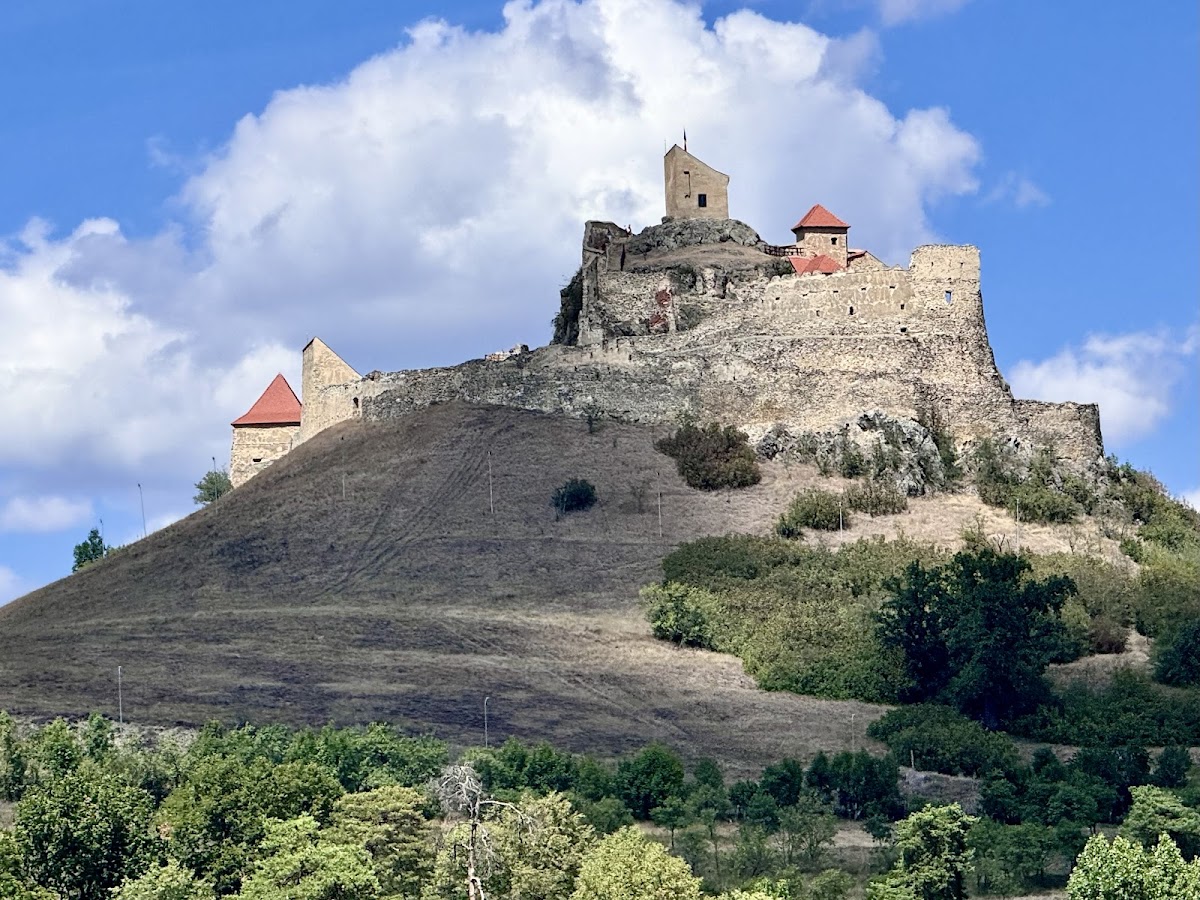
Rupea Citadel is a medieval fortress situated on Dealul Cohalmului, a volcanic basalt rock formation that dominates the town of Rupea, in the northern part of Brașov County, at the boundary between the Podișul Hârtibaciului and the Depresiunea Transilvaniei. The earliest documentary record dates from 1324, under the name Castrum Kuholm — a name of Saxon origin referring to the basalt rock on which it was built — when Saxon settlers who had risen up against King Carol Robert de Anjou took refuge within its walls. The current name derives from the Latin rupes, meaning "rock", while the German variant (Repser Burg) and the Hungarian variant (Kőhalom, meaning "pile of stones") preserve the same reference to the landscape. Archaeological research indicates that the hill was inhabited much earlier, with traces from the Neolithic period and a presumed Dacian fortification; according to tradition, the Romans built a castrum here from which the Latin name is said to derive. The complex developed in stages between the 13th and 17th centuries, as the population grew, and is organised into three successive courtyards arranged in a spiral along the slope: Cetatea de Sus, the oldest nucleus, Cetatea de Mijloc, and Cetatea de Jos. It served a dual role — defensive and administrative — as a Saxon seat of district administration, and in the 15th century the settlement was a craft centre with twelve guilds. Among the preserved structures are several towers, including Turnul Slăninii, where inhabitants stored their provisions during times of refuge. Located at the crossroads of routes linking Transilvania with Moldova and Țara Românească, the citadel fell into ruin during the 20th century, was then fully restored with European funds, and reopened on 15 June 2013.
Strada Dealul Cetatii Rupea judetul Sibiu