
Attraction
Neamț Fortress
Neamț Fortress is a medieval stronghold on the Timuș rock of the Pleșu ridge, at about 480 m above sea level, on the north-western edge of the town of Târgu Neamț. Built during the reign of Petru Mușat (1375-1391) and first recorded in 1395, it was strengthened by Stephen the Great and withstood the siege of Sultan Mehmed II in 1476.
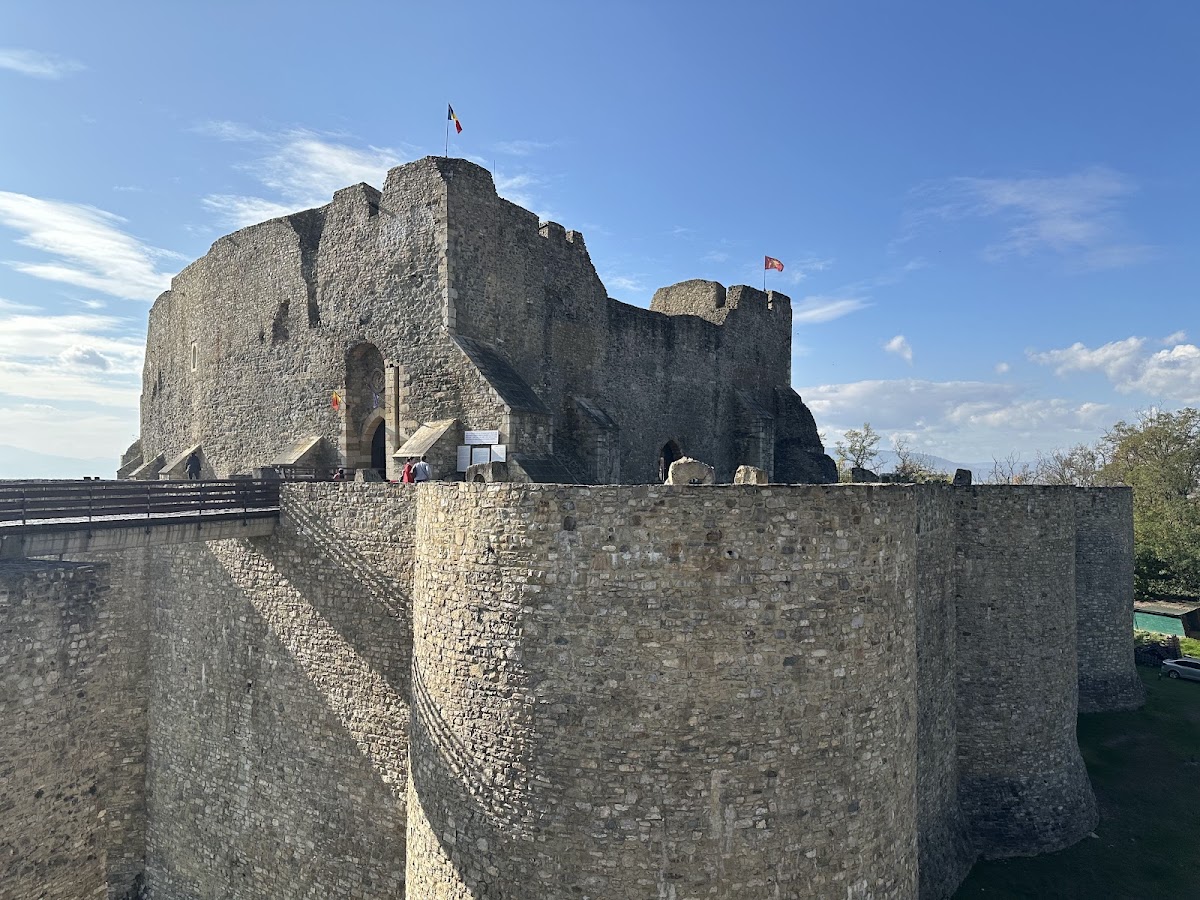
Neamț Fortress stands on the Timuș rock of the Pleșu ridge, also called Dealul Cetății (Fortress Hill), at about 480 m above sea level and some 80 m above the Neamț river, on the north-western edge of the town of Târgu Neamț. It was built in the latter part of the reign of Petru Mușat (1375-1391), as part of the system of fortifications raised in Moldavia at the end of the fourteenth century, and its first documentary mention is a charter issued on 2 February 1395, during King Sigismund of Luxembourg's campaign in Moldavia. Archaeological research found no earlier fortifications on the site.
In 1475-1476 Stephen the Great raised the walls by about 6-7 m and added, on the north side, an outer courtyard with four semicircular bastions, a defensive ditch and an access bridge resting on 11 stone piers. In July 1476, after the battle of Valea Albă, the fortress withstood a siege of about eight days by Sultan Mehmed II. It was later repaired by Vasile Lupu (work completed in 1646), besieged and taken in 1691 by the army of the Polish king John III Sobieski, and in 1718, after the withdrawal of the Austrian troops who had occupied it, partly demolished on the orders of Prince Mihai Racoviță, at the command of the Ottoman Porte.
The original Mușat fort is an irregular quadrilateral with sides of 38.50, 37.50, 47 and 40 m, walls almost 3 m thick braced by 18 buttresses, and towers at the four corners built into the walls. The rooms are arranged around an inner courtyard with a well, and the entrance is through a pointed-arch gate in the north-east tower. After the fortress was abandoned, local people took stone from the walls and the bridge piers for building, until Prince Mihail Sturdza ordered the ruins protected and an access road laid out after 1834.
The fortress was declared a historic monument in 1866 (current LMI code NT-II-m-A-10707), consolidated in 1968-1972 under the architect Ștefan Balș and rehabilitated in 2007-2009 with European funds. Since 4 July 2009 it has operated as a museum of the Neamț National Museum Complex, with 21 furnished rooms including the council and judgement hall, the armoury, the castellan's room, the chapel of St Nicholas, the mint, the prison and a lapidarium. Access is from Strada Ștefan cel Mare via Strada 1 Decembrie and Aleea Cetății, where there are car parks.
Aleea Cetății nr. 1, Târgu Neamț, județul Neamț