
Attraction
Chioar Fortress
Chioar Fortress (Hungarian Kővár, "Stone Castle") is a ruined medieval fortification about three kilometres south of the village of Berchezoaia, Remetea Chioarului commune, on a rocky peak on the left bank of the Lăpuș river. First recorded in 1319, it gave its name to the Chioar Land and was destroyed in 1718 by the imperial troops of General Jean Rabutin. The ruins are a category A historic monument (LMI code MM-I-s-A-04369).
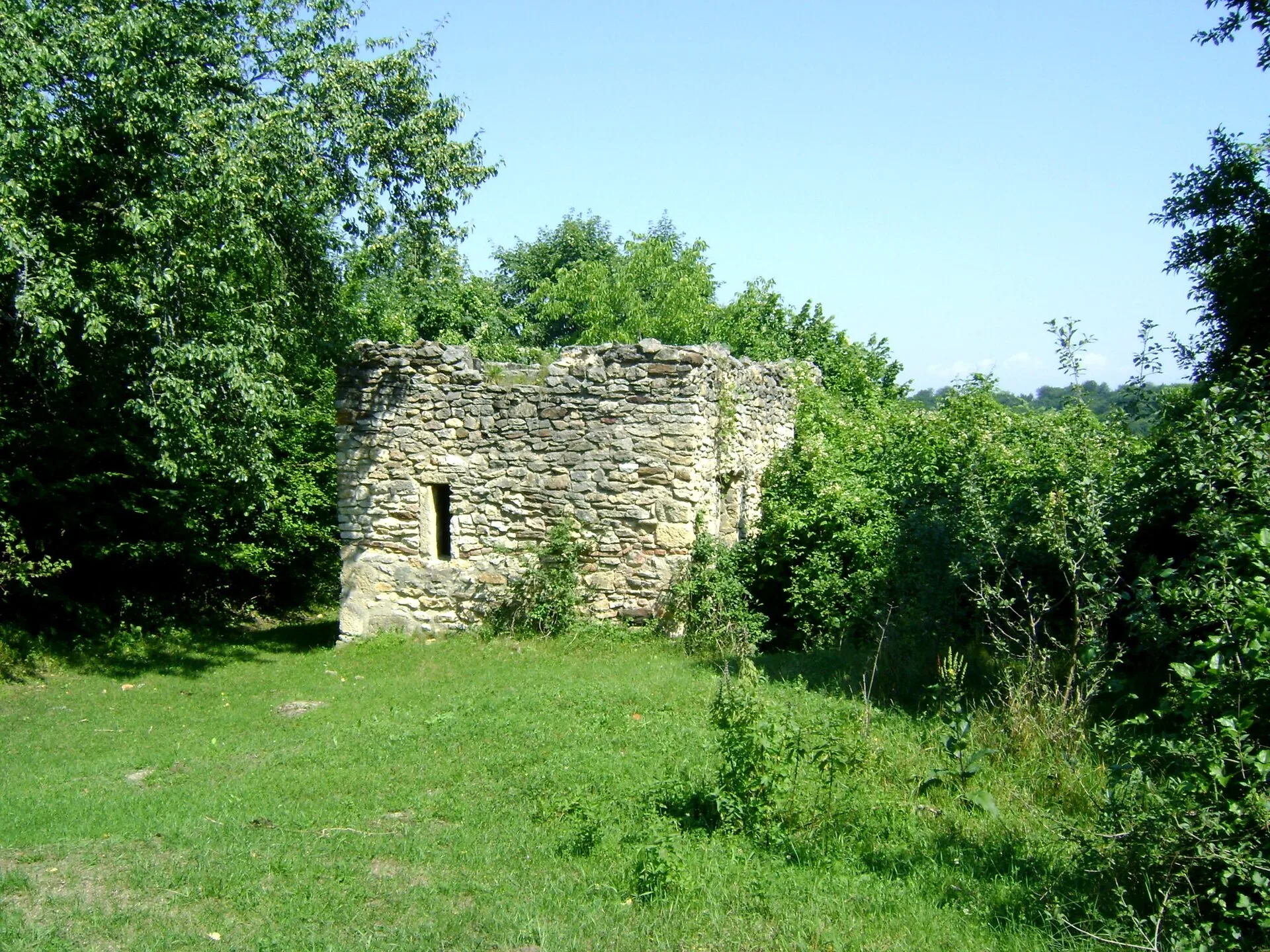
Foto: George basesteanu, CC BY-SA 4.0, via Wikimedia Commons
The ruins of Chioar Fortress lie in Remetea Chioarului commune, about three kilometres south of the village of Berchezoaia, on a rocky peak on the left bank of the Lăpuș river, in the area of the Lăpuș Gorge, on hilly, wooded ground. They are a category A historic monument (LMI code MM-I-s-A-04369, dated thirteenth to eighteenth centuries) and appear in the National Archaeological Record under code 108525.01, with a conservation state of "medium" at the 2019 assessment. The Hungarian name, Kővár vára, means "Stone Castle".
The fortress is first mentioned in 1319, in a document recording that the Transylvanian nobles who rebelled against King Charles Robert of Anjou captured the fortresses of Cehu and Chioar. In 1367 it passed to Drag, and in 1378 it appears as castrum Kewar, owned by the Maramureș voivodes Balc and Drag, to whom King Louis I had granted it. The estate stayed with their descendants, the Drágffy family, until the death of Gáspár Drágffy in 1556, and then passed through several hands, including John Zápolya, the Báthory family and George I Rákóczi. Chioar is recorded as an administrative district from 1549, and the first urbarium of the estate was drawn up in 1566.
During the Kuruc war the fortress was taken in 1703 by the troops of Francis II Rákóczi, and its commander, Mihály Teleki, joined them. After the uprising failed and the Tatar raid of 1717, the Habsburg authorities judged it obsolete and destroyed it in 1718, blowing up the powder magazine and bombarding it with the guns of General Jean Rabutin, so that the Kuruc could no longer use it. The following year the Teleki family bought the ruins and used the stone for their manor at Coltău and for an administrative building in Șomcuta Mare.
Ruins survive on the rocky peak above the Lăpuș. The Chioar district, first run from the fortress, existed until 1876, with its centre at Șomcuta Mare.
Berchezoaia, comuna Remetea Chioarului, județul Maramureș