
Attraction
The Medieval Citadel of Aiud
The Medieval Citadel of Aiud is one of the oldest urban fortresses in Transylvania, documented as early as 1299, located in the city centre on Piața Consiliului Europei. Of irregular polygonal layout, with an area of 3,500 sq m and rough-stone walls 1.2 m thick, the citadel was defended by 9 towers, each assigned to a craftsmen's guild.
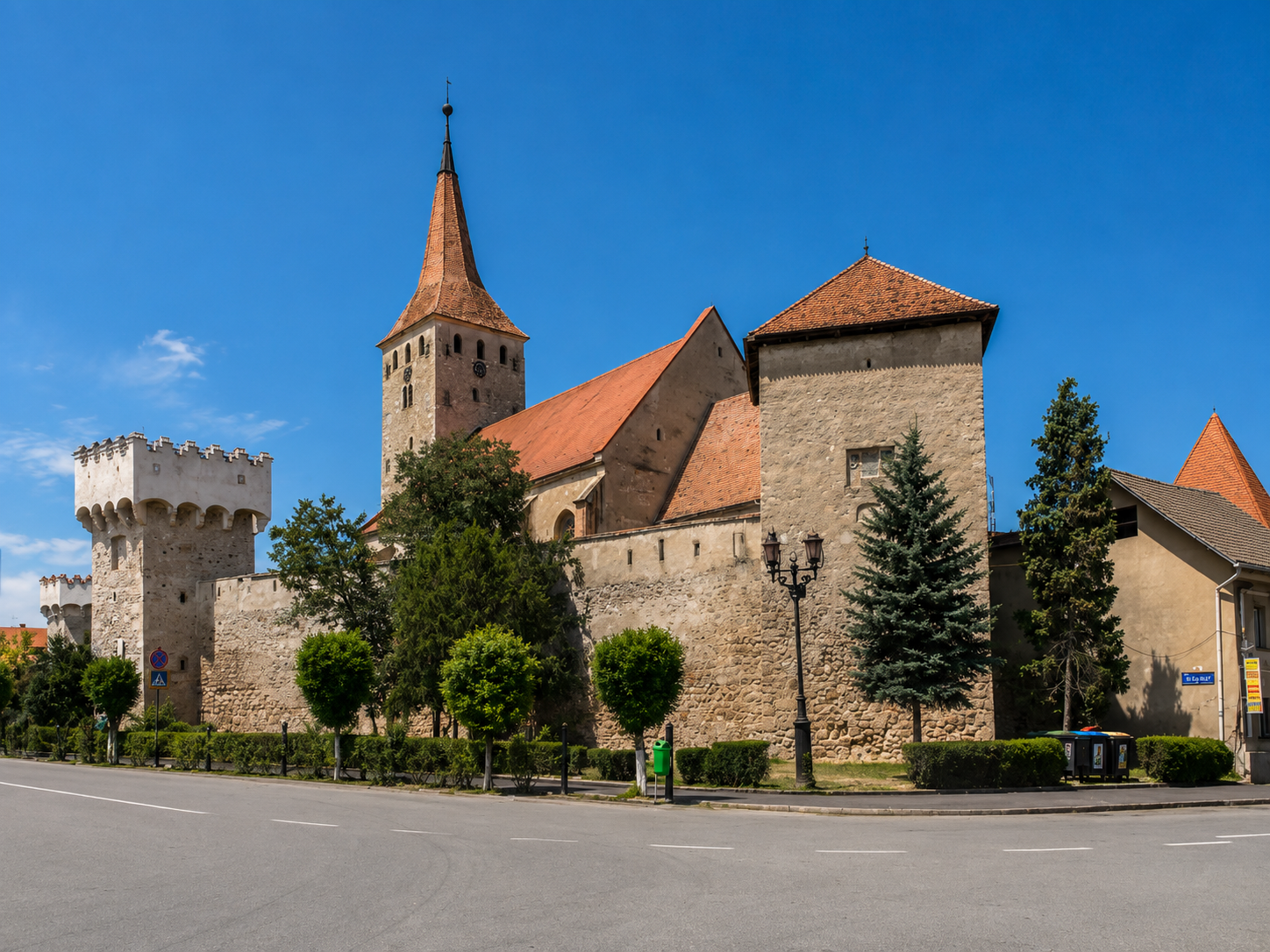
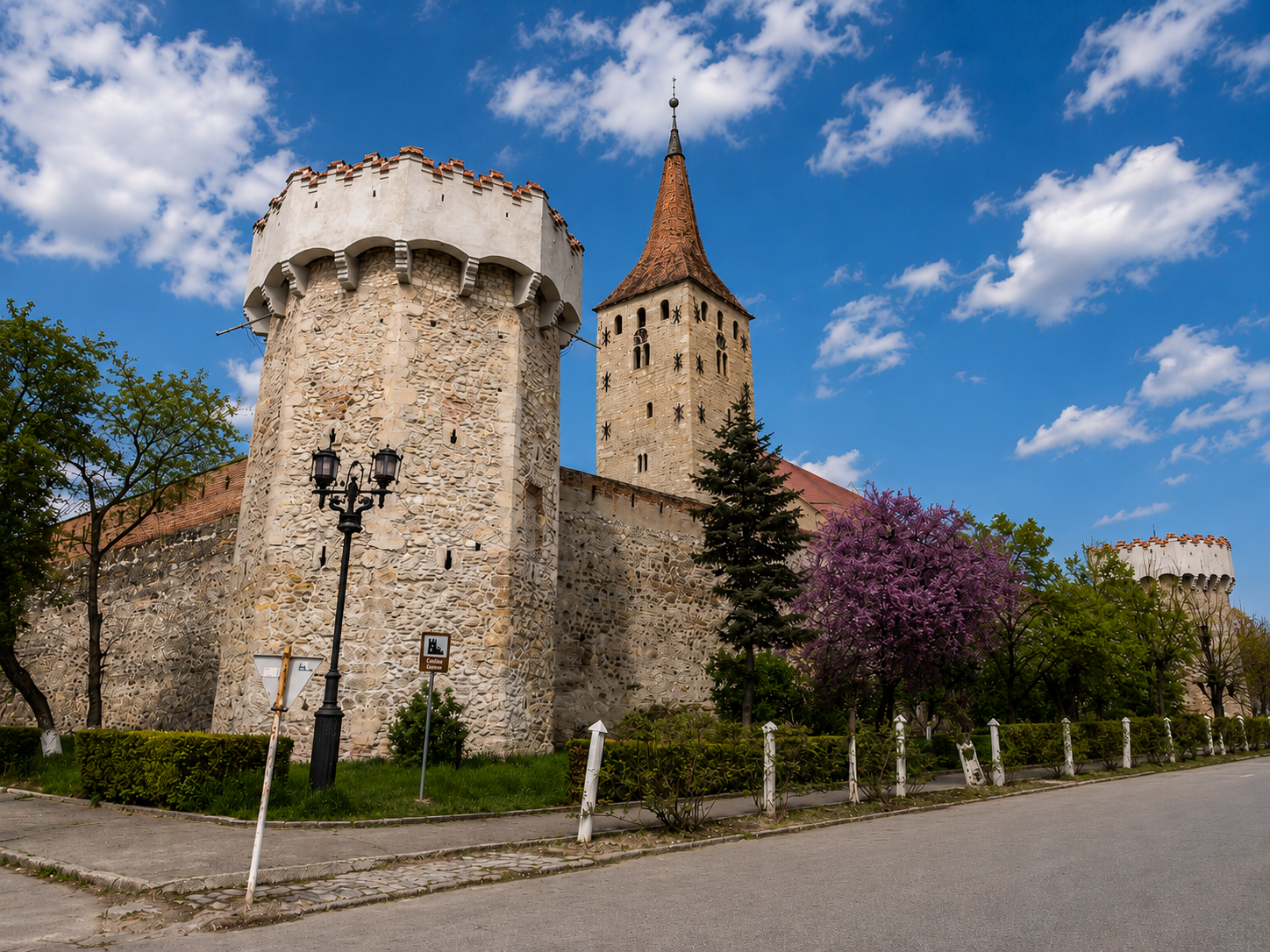
The Citadel of Aiud was built in two phases — the first in the 14th century, when it was a fortified church, and the second in the 16th–17th centuries, when the walls were extended and the current form was finalised. Documentary attestation dates from 1299, and archaeological research carried out between 1974 and 1977 uncovered ceramic materials from the 11th–13th centuries. The citadel has an irregular polygonal layout with a perimeter of approximately 350 m and an area of 3,500 sq m. The rough-stone walls are 1.2 m thick and 7–8 m high, with a 2 m brick parapet above. Until the 18th century, the citadel was surrounded by a water-filled moat fed by the Aiudel river, with access provided by a drawbridge. The 9 towers were each assigned to one of the city's craftsmen's guilds: the Butchers' Tower, the Tailors' Tower, the Cobblers' Tower, the Furriers' Tower, the Coopers' Tower, the Potters' Tower, the Kalendas Tower, the Locksmiths' and Blacksmiths' Tower, and the Gate Tower. Each guild was responsible for the maintenance and defence of its own tower, with guild officers — the citadel's military commanders — elected from among the craftsmen. Within the citadel stand the Reformed-Calvinist Church, the Evangelical-Lutheran Church, and the Voivodal Palace, which houses the city's history collection. The citadel is well worth visiting for the uniqueness of its guild-based defence system and for the excellent state of preservation of its walls and towers.
Piața Cuza Vodă, Aiud