
Attraction
Luncani-Piatra Roșie Dacian Fortress
The Dacian fortress of Piatra Roșie stands on the hill of the same name above the village of Luncani, Boșorod commune, and is part of the UNESCO World Heritage Site "Dacian Fortresses of the Orăștie Mountains", inscribed in 1999. The fortification had two enclosures built at different times, one of them of dressed murus dacicus stone blocks.
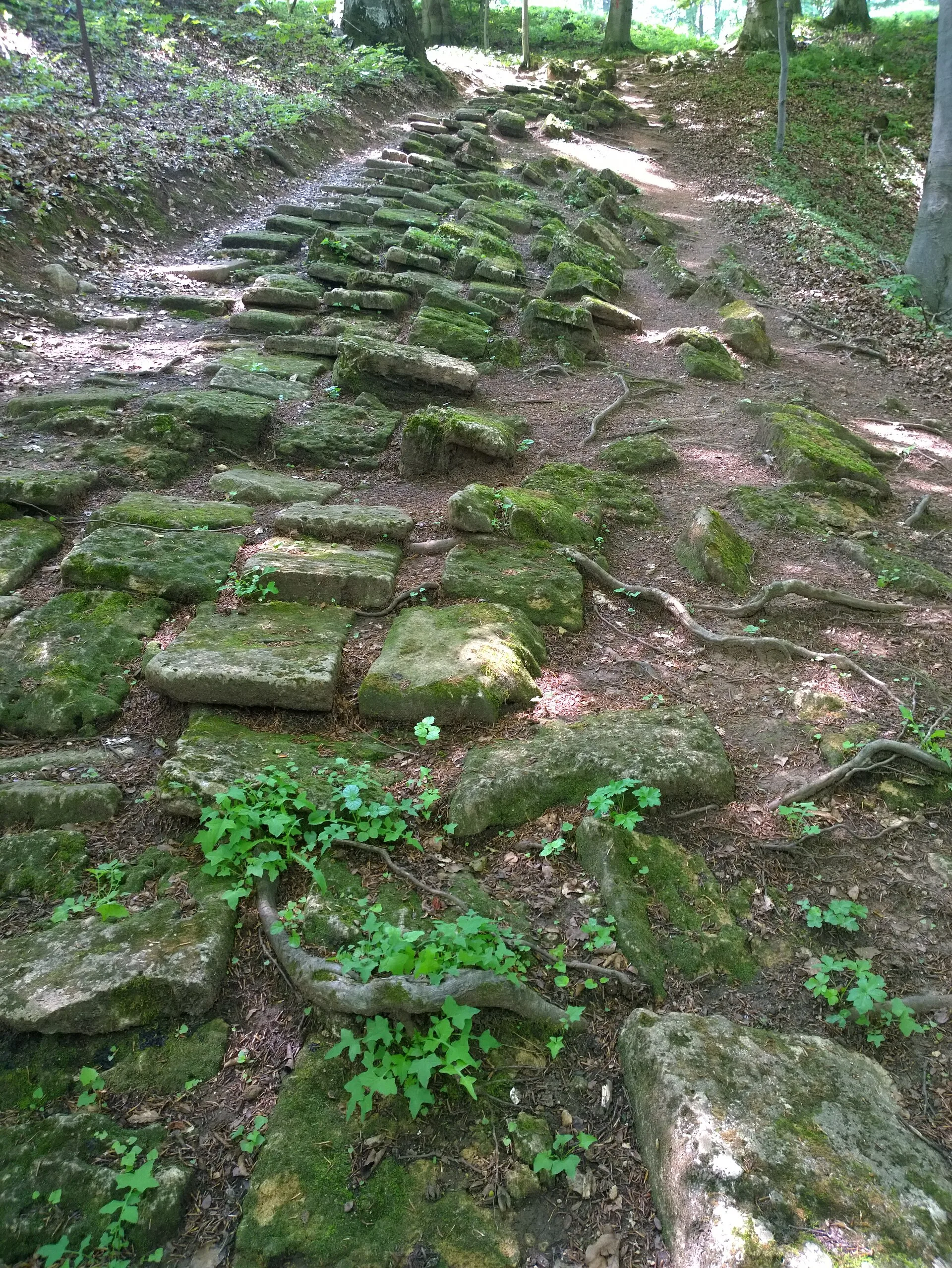
Foto: Korinna, CC BY-SA 4.0, via Wikimedia Commons
The Piatra Roșie Dacian fortress lies on Piatra Roșie hill, south of Boșorod village, between the Luncani, Roșie and Stângu valleys, within the village of Luncani in Boșorod commune, Hunedoara County. The fortification occupies the forested ridge overlooking the Luncani Plateau.
The fortress was built in two phases. First, a rectangular main enclosure 102 m long was raised on the hilltop, with towers at each end and two outlying watchtowers; later, the larger area between the towers was enclosed with walls. The small enclosure, built of dressed stone blocks (murus dacicus), had five towers, four at the corners and one on the east side. The fortress dates from the 1st century BC and was destroyed by the Romans in AD 106.
The first large-scale excavations took place in 1949 under Constantin Daicoviciu. They uncovered the iron cover of a parade shield decorated with an aurochs in a medallion, an iron sword, a three-armed bronze candelabrum and a bronze bust thought to depict the goddess Bendis. Today visitors can see the paved road, the entrance steps and the remains of the walls and towers in the forest.
The site is a Category A historic monument, LMI code HD-I-s-A-03200, and one of the six Dacian fortresses of the Orăștie Mountains inscribed on the UNESCO World Heritage List in 1999, together with Sarmizegetusa Regia, Costești-Cetățuie, Costești-Blidaru, Bănița and Căpâlna. The last stretch to the fortress is on foot.
Dealul Piatra Roșie, sat Luncani, comuna Boșorod, județul Hunedoara