
Attraction
Carsium Fortress
Carsium Fortress stands on the right bank of the Danube, in the town of Hârșova, Constanța County. Raised over a Getic fortification, it was strengthened with stone walls in AD 103 by the emperor Trajan and became a key point on the Danubian limes. It was destroyed and rebuilt across nearly two millennia, until, after the Peace of Adrianople, the Ottomans were compelled to blow it up. More Roman milestones have been found here than anywhere else in Dobruja, ten in all. The site has recently been restored and returned to the visitor circuit.
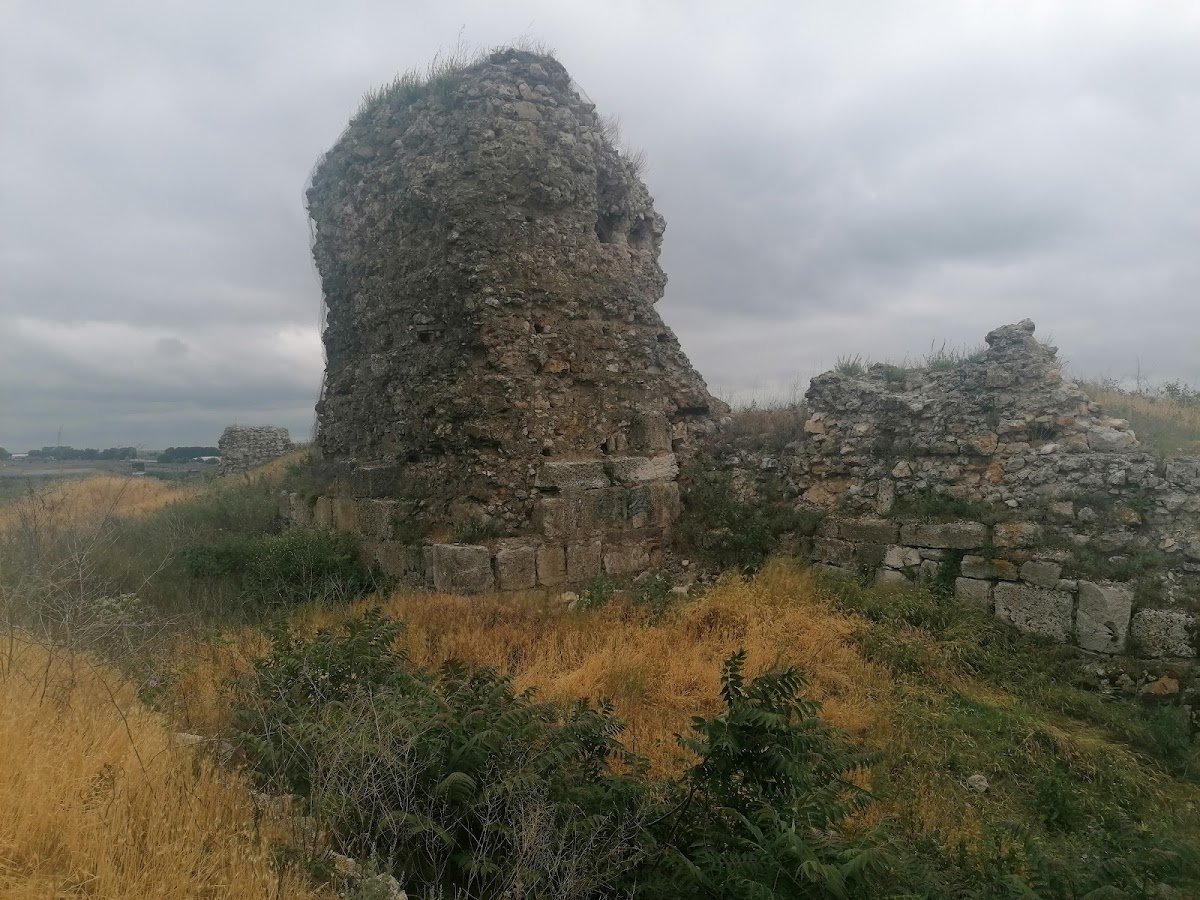
Carsium Fortress rises on the right bank of the Danube, in the town of Hârșova, Constanța County, at a strategic point controlling the river crossing. It is a listed historic monument, coded CT-I-m-A-02676, and one of the most important fortifications on the Roman Empire's Danubian limes.
The name, of Thracian origin, appears in numerous ancient sources: in Ptolemy of Alexandria, in the mid-2nd century, then as Carsio in the Tabula Peutingeriana, Carso in the Itinerarium Antonini, and in the Notitia Dignitatum. The settlement, however, has Getic roots, over which the Romans raised, in the second half of the 1st century AD, a fortification of timber, defended by ditches and earthen ramparts with palisades.
In AD 103, during the Dacian wars, the emperor Trajan strengthened the fortification with stone walls. The fact is attested by a fragment of the inaugural inscription. A garrison stationed here guarded the Empire's northern frontier. The bricks recovered bear the stamps of the military units that passed through: ala Gallorum Flaviana, ala I Flavia Gaetulorum, Classis Flavia Moesica, Legio I Italica, and from the later 2nd century, ala II Hispanorum et Aravacorum.
The fortress was destroyed and rebuilt several times, after attacks by Goths, Huns, and other migrating peoples, and was restored by emperors including Diocletian, Constantine the Great, and Justinian. The northern gate of the 4th-century fortification was found only in 2009, some three hundred metres from the Danube's bed. It was flanked by two monumental U-shaped towers, oriented precisely toward the river crossing. The discovery established, for the first time with certainty, the fortress's northern limit.
Carsium was more than a military outpost. Hârșova has yielded the largest number of Roman milestones in all Dobruja: ten to date. The implication is clear: the authorities permanently maintained the roads linking the fortress to the rest of the limes and to the province's interior, and the settlement functioned as an important centre of trade and transit. Excavations have brought to light gold jewellery, pottery, tools, inscriptions, baths, and an apsed building, most likely a Christian basilica. Earlier campaigns produced vessels bearing Christian symbols, fish and crosses, and oil lamps with cross-shaped handles. In the 5th century, Carsium was one of the fourteen episcopal seats of Scythia.
The story does not end in antiquity. In the 10th century the Byzantines rebuilt the fortress; later the Genoese used it; from the 15th century to the early 19th it was held by the Ottomans, and the chronicler Evliya Çelebi records the town under the name Harisova. The medieval enclosure wall protected a perimeter of some twenty-four hectares. In its final period, the fortress was the scene of bloody confrontations between the Ottoman and Russian empires. Under the Peace of Adrianople, the Porte was obliged to demolish the fortifications on the Danube's right bank, and the fortress was blown up and turned into a stone quarry for the modern town, which was built over it.
A few imposing walls still stand among the ruins. The commander's tower, on the northern side of the smaller enclosure, survives to a height of over nine metres. By the Danube, a monumental wall about forty metres long marks the area where the harbour operated, from antiquity until the fortress's destruction, over seventeen or eighteen centuries. Beside the fortress lies a Neolithic settlement seven millennia old.
Archaeological research began in 1939, continued sporadically in 1943 and 1963, and became systematic only in the past two decades. On 25 April 1945, Hârșova Fortress was declared a historic monument, alongside Histria, Tropaeum Traiani, Callatis, and Capidava, at the proposal of the then Minister of Arts, Mihail Ralea. Four protected areas survive today: the reserved area by the Danube, the northern gate of the 4th-century fortress, the northwest tower of the medieval fortification, and the fortification on Belciug Hill.
The site has been restored, conserved, and returned to the visitor circuit through a project of Constanța County Council, funded from European sources. Visitors now find explanatory panels, laid-out trails, and an exhibition space. Along the routes, dozens of fragments of ancient and medieval architecture, fragments of inscriptions, and Roman milestones have been placed.
Carsium Fortress is worth visiting because it is one of the few places where eighteen centuries of fortification can be read on a single hill: a Getic rampart, a wall of Trajan's, a Constantinian gate with U-shaped towers, a Byzantine enclosure, an Ottoman town, and, above them all, a modern town raised from their stones.
Harsova judetul Constanta