
Attraction
Cetatea Bologa
Cetatea Bologa is a medieval fortification located in the village of Bologa, commune of Poieni, Cluj County, built strategically on a rocky hill above the valley of the Crișul Repede river, at the foot of the Vlădeasa Mountains. Documented as early as 1304 under the name Sebuswar, the fortress was one of the most important fortifications in western Transylvania, serving to monitor the road to Oradea and to control the customs point on the Crișul Repede valley. In 1399, it was granted by King Sigismund of Luxembourg to the ruler Mircea cel Bătrân. Today, the keep and part of the walls are still standing, having been recently restored.
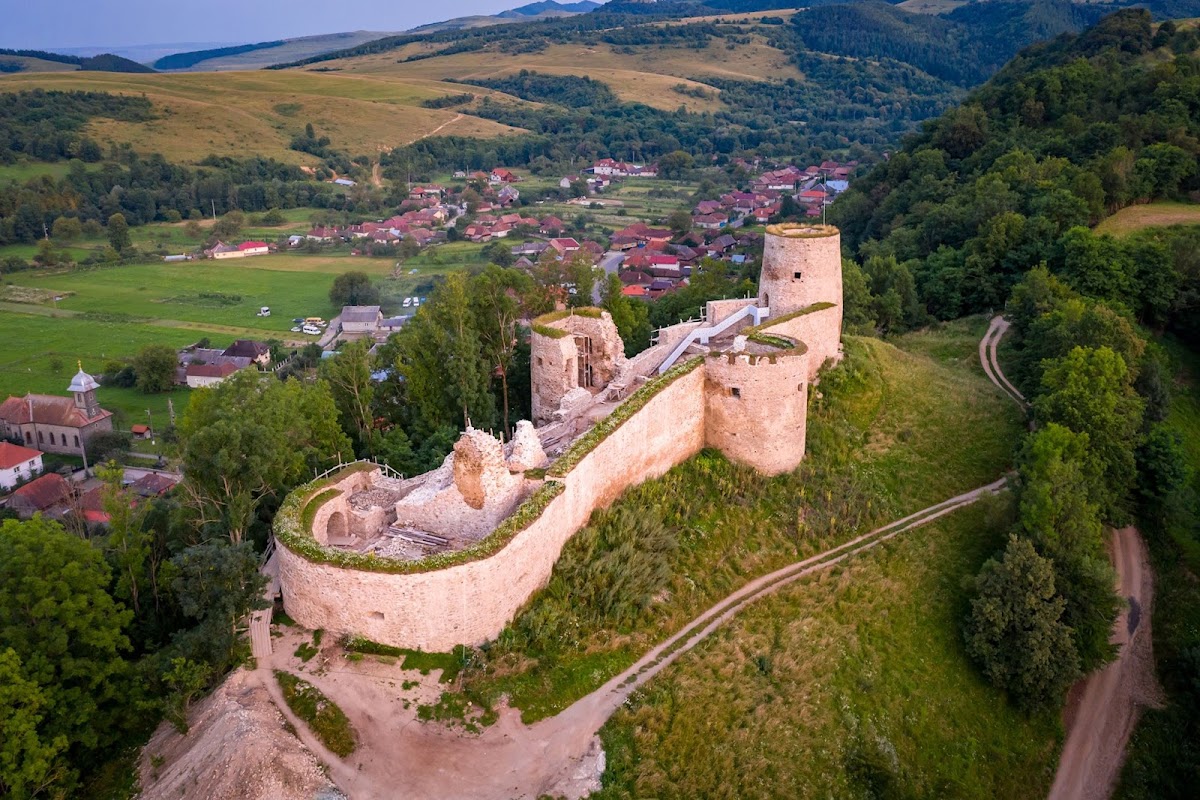
Cetatea Bologa is a medieval fortification located in the village of Bologa, commune of Poieni, Cluj County, in the ethno-folkloric region of Țara Călatei, built on a rocky hill at the confluence of the Crișul Repede river with the Sebeș (Săcuieu) river, at the foot of the Vlădeasa massif in the Munții Apuseni. The fortress was most likely built at the end of the 13th century and is considered one of the oldest royal fortresses in Transylvania; its first documentary attestation dates from 1304, under the name Sebuswar (Sebesvár), a name by which it was known for a long time, alongside variants such as Cetatea Sebeșului and Cetatea Huedinului. Strategically positioned, the fortress served to monitor and defend the commercial road linking Transylvania to Oradea along the gorge of the Crișul Repede, and to collect customs duties on goods passing through this corridor, while also serving as a refuge for the population in times of invasion. An important moment in its history came in 1399, when King Sigismund of Luxembourg donated the fortress, together with Cetatea Bran, to the ruler of Țara Românească, Mircea cel Bătrân, as a token of appreciation for his role in the anti-Ottoman struggles; subsequently, in 1433, the fortress passed into the ownership of the Bánffy nobility. Its military importance grew in the 17th century, following the Ottoman conquest of Oradea, when the garrison at Bologa prevented Turkish raiding parties from penetrating through the gorge of the Crișul Repede. The fortress remained in use until the 18th century, when it was damaged by an explosion during the uprising led by Francisc Rákóczi al II-lea; nevertheless, the keep and a large portion of the walls remained standing. Today, the recently restored ensemble preserves the circular defensive tower, sections of the enclosure walls and traces of the interior structures, offering a remarkable panoramic view over the Crișul Repede valley. In the immediate vicinity lie the ruins of the Roman fort Resculum, part of the defensive system of the province of Dacia, as well as an old watermill.
Bologa judetul Cluj