
Attraction
Cetatea Aradului
Cetatea Aradului is a Habsburg bastion fortress built between 1763 and 1783, designed according to the Vauban system, with six bastions and walls up to 5 metres thick. The complex, covering more than 80 hectares, is associated with the execution of thirteen revolutionary generals on 6 October 1849. It stands as one of the most intact examples of 18th-century military architecture in Romania.
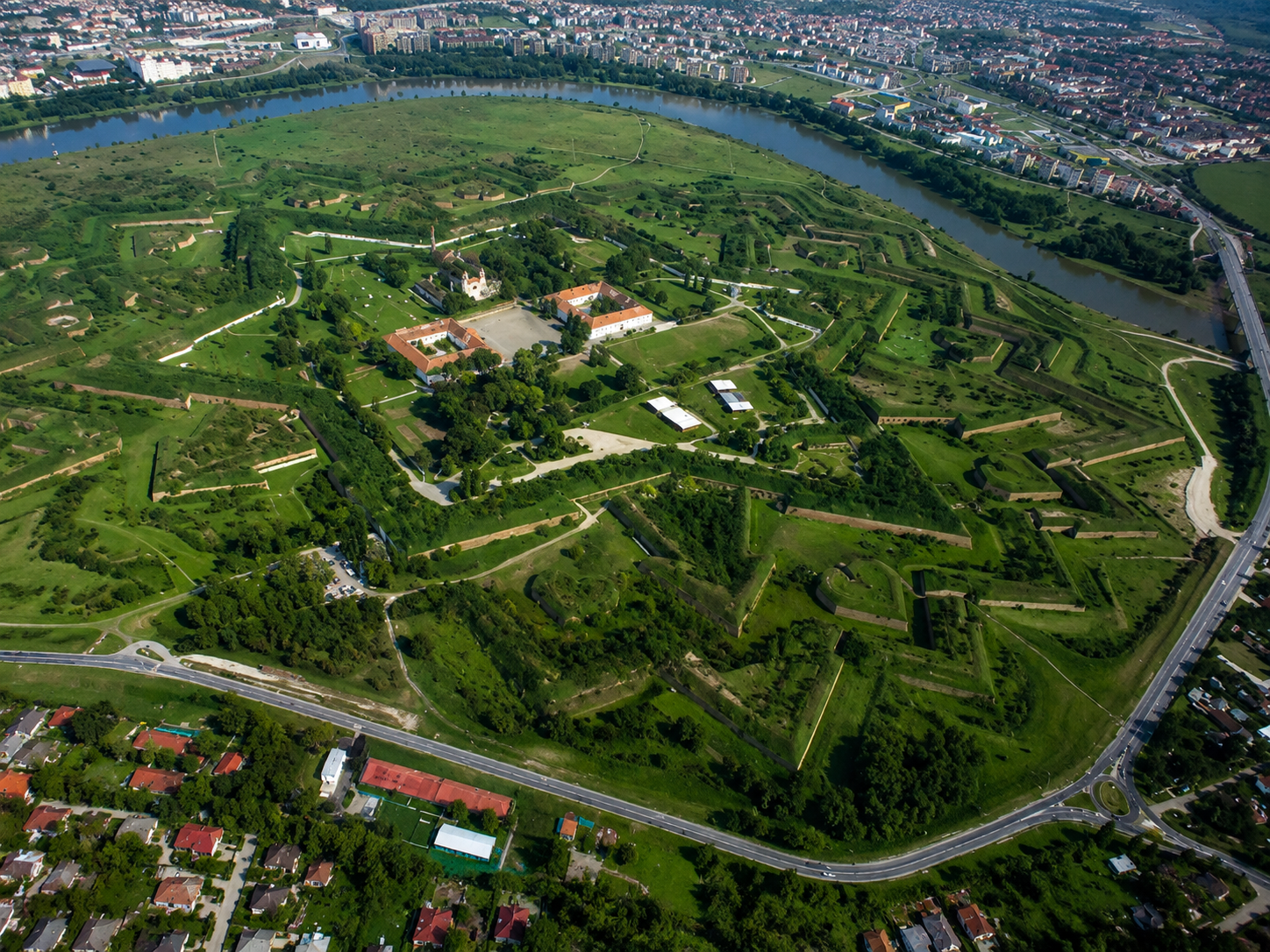
Cetatea Aradului is a bastion fortress built between 1763 and 1783, by order of Empress Maria Theresa, on the left bank of the Mureș River, in the Subcetate district of the municipality of Arad. It is one of the best-preserved examples of Habsburg military architecture in Romania, designed according to the Vauban system, with six pentagonal bastions arranged symmetrically around a hexagonal central nucleus. The total area of the fortified complex exceeds 80 hectares, including defensive ditches, a counterscarp, and a glacis. The walls are up to 5 metres thick, built from brick and stone, and were designed to withstand the modern artillery of the era. The fortress played a significant role in the history of the 1848–1849 revolution: on 6 October 1849, thirteen generals of the revolutionary Hungarian army were executed here, later known as "The Thirteen Martyrs of Arad". During the interwar and communist periods, the fortress functioned as a prison, a role it partially continues to fulfil today. It is accessed from the centre of the municipality of Arad by crossing the bridge over the Mureș in the direction of the Subcetate district, approximately 2 km from the city centre. It is well worth visiting for its exceptional architectural value within the context of bastion fortification systems in Central Europe, and for the documented historical significance of the 1849 events that took place within its walls.
Cartier Subcetate, Arad