Attraction
Aegyssus Fortress
An archaeological site on Monument Hill in Tulcea: a fortress recorded by Ovid in AD 12, later a Roman and Romano-Byzantine stronghold on the Danube frontier and a bishop's seat in the 6th century. Late Roman remains are visible, and the finds are displayed in the adjacent Museum of History and Archaeology.
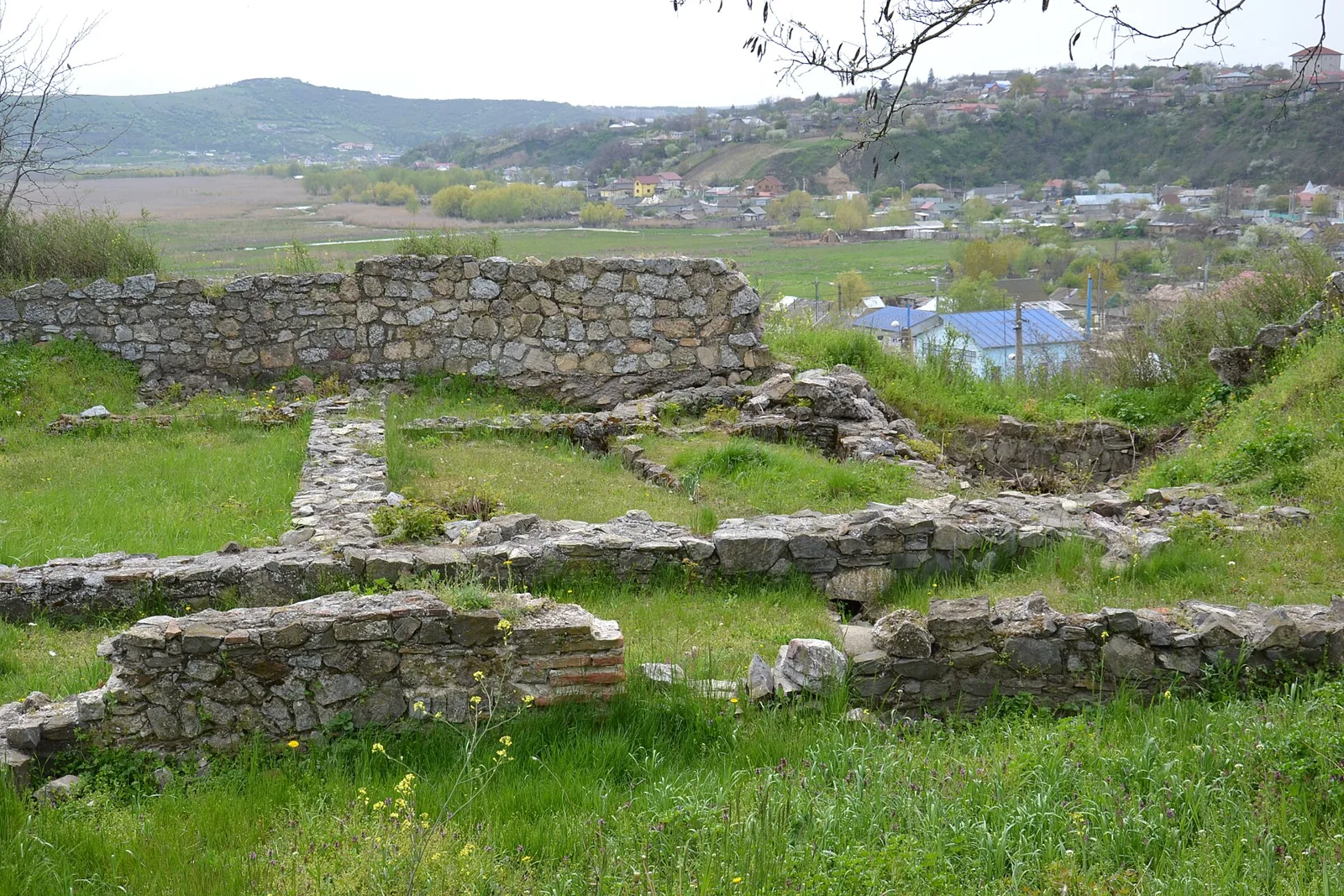
Foto: Radu Filep, CC BY-SA 3.0 RO, via Wikimedia Commons
Aegyssus Fortress lies on Monument Hill (the old Colnicul Horei), in the north-eastern part of the city of Tulcea, in the park where the Independence Monument also stands. The same hill houses the Museum of History and Archaeology of the Gavrilă Simion Eco-Museum Research Institute of Tulcea (ICEM), which manages the site.
According to ICEM, the fortress was built at the end of the 4th century BC. The poet Ovid, exiled at Tomis, describes a Getic attack on it in AD 12 and calls it an "old city" (vetus urbs). At the beginning of the 2nd century it became part of the Danube frontier, from the 3rd century it was an important military base, and in the 6th century a bishop's seat. Urban life ended in the first quarter of the 7th century; the area was inhabited again in the 10th and 11th centuries. The first finds, in the early 20th century, are linked to Constantin Moisil.
Today several late Roman archaeological features can be seen on Monument Hill. Excavations in the 1970s uncovered a large public bath building and an amphora store, and those led by Victor H. Baumann in the 1990s a provisions store. Between 2015 and 2018, excavations were carried out by ICEM specialists and, from 2017, by the Institute of Archaeology in Iași, helped by student volunteers. Many of the finds are on display in the Museum of History and Archaeology next to the site. The hill is reached on foot from the city centre, about 1 km from the Danube promenade.
The site is a historic monument of national importance, LMI code TL-I-s-A-05718 (RAN code 159623.01), comprising the late Roman fortress of Aegyssus, the Roman fortress, the civil settlement, the necropolis, a Geto-Dacian fortress and a medieval settlement.
Did you know that Ovid also recorded the legend of the city's founding? In his letter to his friend Severus (Epistulae ex Ponto, book I, 8), the poet writes that, if the locals are to be believed, the city was founded by Caspios Aegisos, who gave it his own name.
Dealul Monumentului (Colnicul Horei), Parcul Monumentul Independenței, str. Gloriei, Tulcea, județul Tulcea