
Attraction
The Saints Peter and Paul Cathedral Constanța
The "Holy Apostles Peter and Paul" Cathedral in Constanța is the first Orthodox place of worship built in Dobrogea after its reintegration in 1878, constructed between 1883 and 1885 according to the plans of architect Alexandru Orăscu, in a Neo-Byzantine style using pressed brick. The foundation stone was laid on 4 September 1883, with the founding document bearing the signatures of King Carol I and Queen Elisabeta. The consecration took place only on 22 May 1895, a decade behind schedule, due to the controversial interior paintings executed by George Demetrescu Mirea. Listed as an architectural monument since 1953, it houses the relics of the Holy Martyr Radu Brâncoveanu.
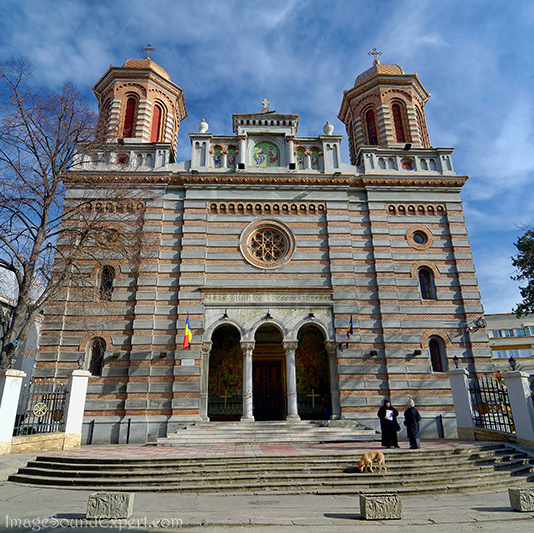
The "Holy Apostles Peter and Paul" Cathedral in Constanța is located in the peninsular area of the city, in front of the Arhiepiscopia Tomisului building, its monumental architecture dominating the southern waterfront promenade. It was built between 1883 and 1885 as the first Orthodox place of worship in Dobrogea following the War of Independence of 1877 and the province's reintegration into the Romanian state in 1878. The foundation stone was consecrated on 4 September 1883, and the founding document — placed within the foundations together with medals, decorations and national coins — bears the signatures of King Carol I and Queen Elisabeta. The construction plans were drawn up by architect Alexandru Orăscu, with Carol Benesch serving as site supervisor and Henri Guaracino as the contractor. The interior furnishings were designed by architect Ion Mincu. The building, in Neo-Byzantine style, constructed from pressed brick with cement bands, is distinguished by its monumental façade, trefoil-shaped floor plan, three turrets and a bell tower standing 35 m tall. A provisional handover took place in 1885, but the consecration was delayed by a decade due to the interior paintings executed by George Demetrescu Mirea, who was accused of giving the holy figures a resemblance to the noblewomen from the artist's social circle. The official consecration took place on 22 May 1895. On 3 August 1941, a Soviet bombardment damaged the altar, the iconostasis and the paintings. The repainting was carried out between 1959 and 1961 by Gheorghe Popescu and Niculina Dona-Delavrancea, in a Byzantine style with Romanian accents. The cathedral has functioned as an episcopal cathedral since 1923 and has been listed as an architectural monument since 1953. The surrounding park contains an archaeological complex with elements from the ancient city of Tomis. The cathedral houses the relics of the Holy Martyr Radu Brâncoveanu, canonised in 1992.
Strada Arhiepiscopiei 25, 900742 Constanța