
Attraction
The Roman Castrum of Tirighina-Bărboși
The Roman castrum of Tirighina-Bărboși is an important Daco-Roman archaeological complex located in the western part of the municipality of Galați, Galați County, on a promontory overlooking the valley of the Siret River, near its confluence with the Danube. On the Tirighina heights, initially occupied by a Dacian fortification, the Romans erected a military stronghold at the beginning of the 2nd century AD, which was subsequently transformed into a stone castrum. The complex, covering approximately 10 hectares, represented the easternmost outpost of Roman defence at the mouth of the Siret, within the province of Moesia Inferior, and is the only historical monument of national importance in Galați County.
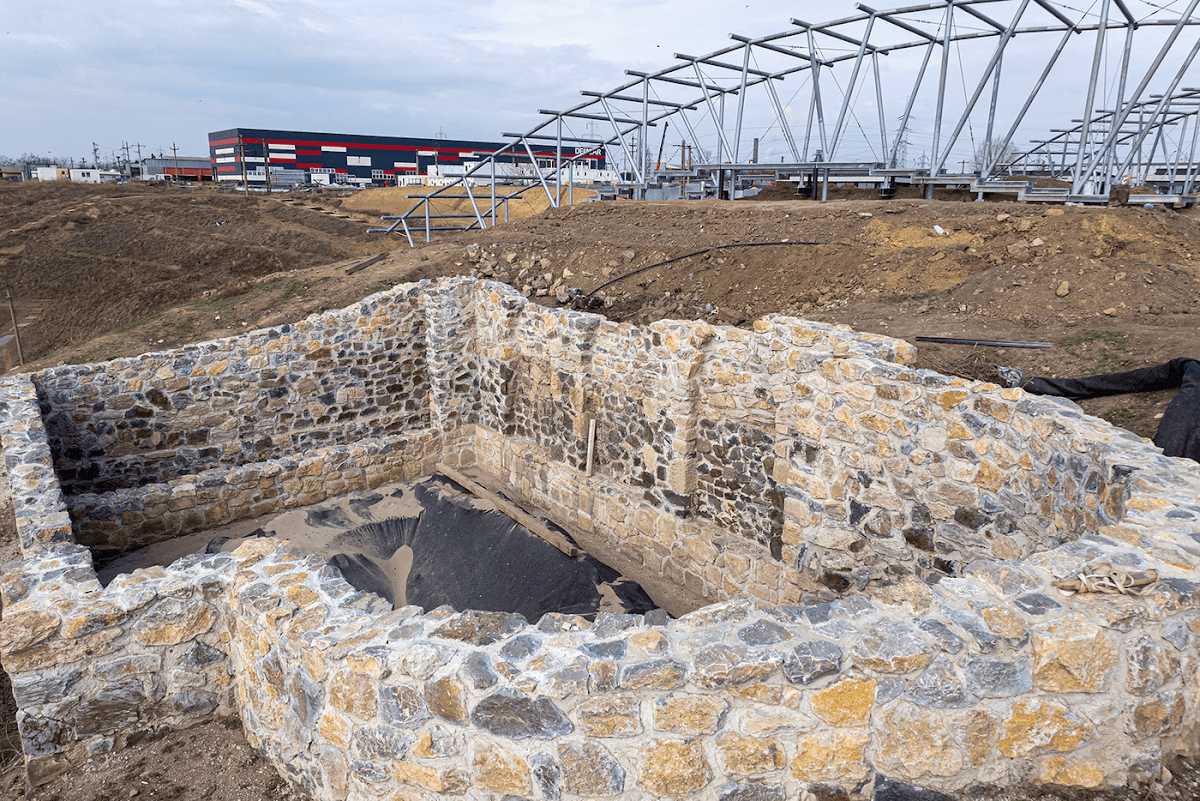
The Roman castrum of Tirighina-Bărboși is an important Daco-Roman archaeological complex situated in the western part of the municipality of Galați, Galați County, on the Tirighina promontory, a natural elevated position overlooking the valley of the Siret River, near its confluence with the Danube. The heights, known in the past also as Gherghina, were inhabited as early as the 1st century BC by a Dacian fortification (dava), reinforced with an earthen rampart and a palisade. At the beginning of the 2nd century AD, the Romans built a castellum over its ruins — a military fortification initially made of earth and later of stone; subsequently, when this proved insufficient for the garrison at the mouth of the Siret, a rectangular stone castrum was also erected. Although the area did not form part of the province of Dacia, it constituted the easternmost outpost of imperial defence, integrated into the defensive system (limes) along the Danubian frontier of the province of Moesia Inferior, with the role of monitoring navigation on the Siret and the Danube. Archaeological research has identified three phases of the fortification's existence, spanning from the beginning of the 2nd century (the years 101–106) to around the middle of the 4th century AD, with an interruption at the end of the 3rd century and a resumption during the reign of Emperor Constantine the Great. Over time, the garrison was provided by detachments from Roman military units such as Legio V Macedonica, Cohors II Mattiacorum, and the fleet classis Flavia Moesica. The entire archaeological complex covers approximately 10 hectares and comprises, in addition to the castrum and castellum, two Roman necropolises — one of which is tumular — amphora deposits, and a civilian settlement. After the fortification was abandoned, some of its stone and brick were reused in the construction of other buildings in Galați, including the Church of Precista, the oldest historical monument in the city. Today, the south-eastern corner of the Roman castrum and fragments of its foundations remain visible on the surface of the promontory. The site is listed as a historical monument of national importance and is the only monument of this rank in Galați County.
Promontoriu Castru roman Tirighina, 807291 Galați