
Attraction
Magna Curia Palace and Museum of Dacian and Roman Civilisation
Magna Curia, also called Bethlen Castle, is a palace at the foot of Citadel Hill in Deva and the oldest surviving historic-monument building in the city. It grew out of a house built in 1582, which Prince Gabriel Bethlen turned into a palace and which was remodelled in Baroque style in the eighteenth century. Since 1938 it has housed the Museum of Dacian and Roman Civilisation.
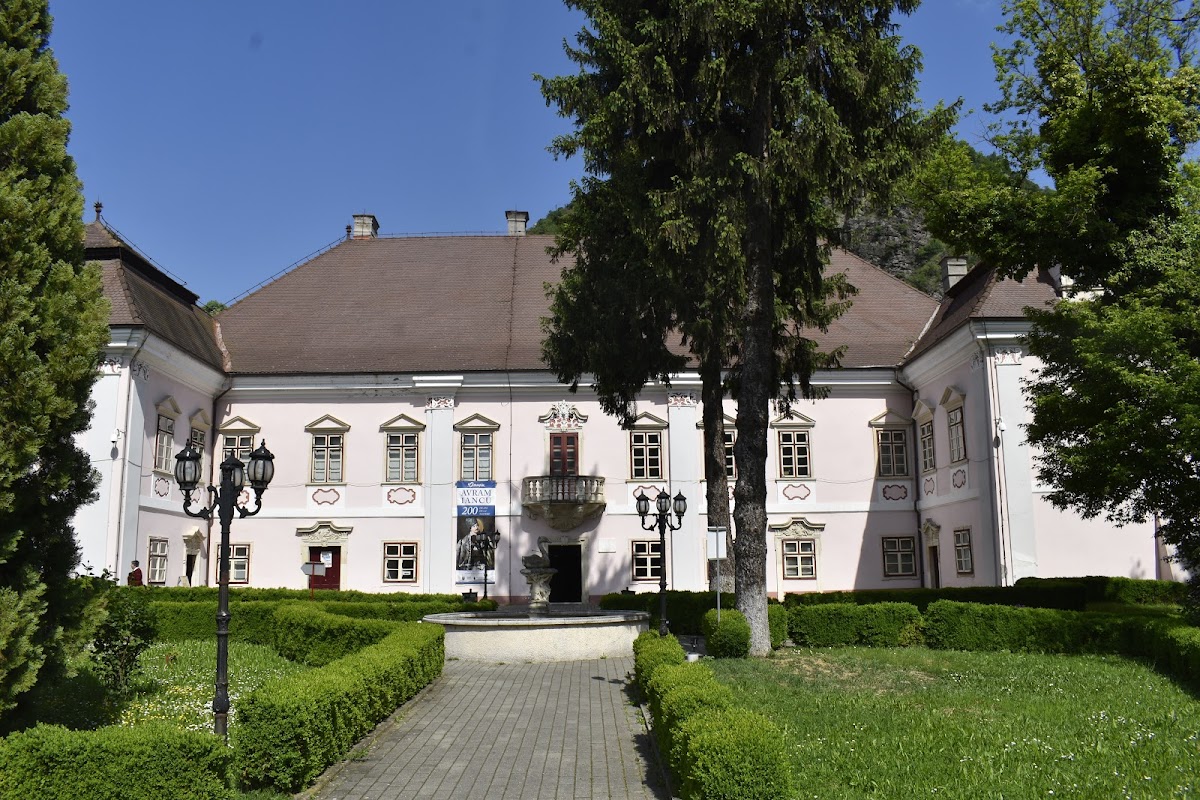
Magna Curia Palace (Latin for "Great Court"), also known as Bethlen Castle, stands at 39 Bulevardul 1 Decembrie 1918 in Deva, at the foot of Citadel Hill beside the city park. It is the oldest surviving historic-monument building in Deva and is listed as a historic monument under code HD-II-m-A-03225.
In 1582 Francisc Geszty, captain of the Deva fortress garrison, built a house on this site, later used as a residence by Sigismund Báthory, General Basta, Stephen Bocskai, Gabriel Báthory and Gabriel Bethlen. Prince Gabriel Bethlen turned it into a Renaissance palace in the first decades of the seventeenth century. The building received its final, Baroque form in the early eighteenth century.
The Museum of Dacian and Roman Civilisation traces its origins to the History and Archaeology Society of Hunedoara County, founded in 1880; the archaeologist Gábor Téglás was the museum's first director. The museum has occupied Magna Curia since 1938. Its collections cover prehistoric, Dacian, Roman and early medieval archaeology, including Roman reliefs from Ulpia Traiana and Micia, as well as coins, weapons, decorative art, ethnography (costumes, pottery, icons painted on glass), natural sciences and a research library with old Romanian and foreign books.
The palace was last restored between 1998 and 2006. Inside, the decoration and the fireplace of the audience hall stand out, while the courtyard well is the only surviving element of the original exterior. The museum also runs other units in the county, including the Ethnography and Folk Art Museum in Orăștie and the museum complex at Sarmizegetusa.
Bd. 1 Decembrie 1918 nr. 39, Deva, județul Hunedoara