
Attraction
Kemény Castle in Brâncovenești
Kemény Castle in Brâncovenești is a Renaissance castle with a square plan and corner towers, built on the site of a royal fortress mentioned in 1228 and remodelled by Ferenc Kendi in 1537-1555. It belonged to the Kemény family from 1648 until its nationalisation after the Second World War and, after its restitution in 2014, it is open to visitors. It is a listed historic monument (MS-II-a-A-15616) and stands next to the Roman fort of Brâncovenești, inscribed on the UNESCO World Heritage List in 2024.
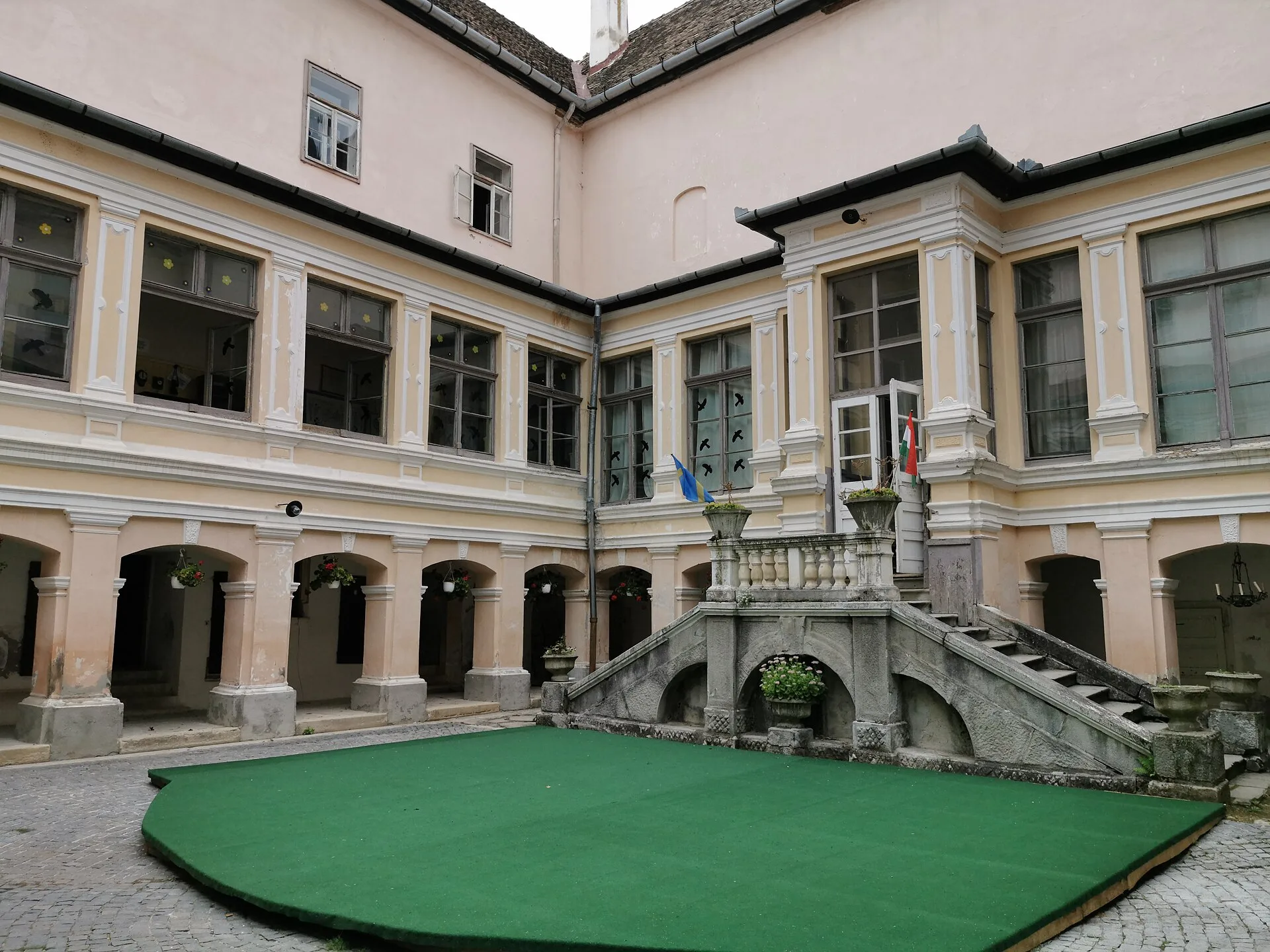
Foto: Elekes Andor, CC BY-SA 4.0, via Wikimedia Commons
Kemény Castle stands in the village of Brâncovenești, seat of the commune of the same name in Mureș County, close to the DN15 road, on a high terrace above the Mureș river. The same plateau held a Roman fort, destroyed during the migration period; inscriptions found there name it Ala Nova Illyricorum, and its remains survive in the castle's former orchard. Since 2024 the Brâncovenești fort has been part of the UNESCO World Heritage site "Frontiers of the Roman Empire, Dacia"; the castle itself is not part of that site.
Stone from the Roman fort was used in the early thirteenth century to build a royal fortress, recorded in 1228 as "castrum Wecheu". After the Mongol invasion it passed to the Tomaj kindred, and it was then held for about 150 years by the Bánffy de Losoncz family, until their revolt against King Matthias in 1467. Its Renaissance form dates from 1537-1555 and is the work of Ferenc Kendi (inscriptions on the castle bear the years 1537 and 1555); after his execution the estate passed to the treasury in 1558. Later owners included Sigismund Báthory, István Wesselényi, Gabriel Bethlen and George I Rákóczi.
On 28 November 1648 George II Rákóczi gave the castle and five villages to János Kemény, later Prince of Transylvania, and his descendants. The Kemény family held it for about 300 years. From the summer of 1926 the castle hosted the annual meetings of the Transylvanian Hungarian writers gathered around the review "Erdélyi Helikon", at the invitation of Count János Kemény. The building has a square plan with an inner courtyard, four corner towers, Renaissance window frames and a balcony on stone corbels above the entrance on the north side.
The castle was ransacked at the end of the Second World War and, after nationalisation, served as a reformatory for minors and later as a home for children with disabilities. The Kemény heirs took possession of it in 2014, and on 8 November 2014 the castle opened to visitors. The building still needs renovation, but several rooms have been restored and furnished, and the garden is open to visitors. The castle is a listed historic monument (LMI code MS-II-a-A-15616) and lies on the Via Transilvanica trail.
Strada Castelului 215, Brâncovenești, județul Mureș