
Attraction
Cantacuzino Castle Bușteni
Cantacuzino Castle in Bușteni, completed in 1911 to the designs of architect Grigore Cerchez, is one of the most representative Neo-Romanian style monuments in Romania. Built at the foot of the Bucegi Mountains by Prince Gheorghe Grigore Cantacuzino, nicknamed "The Nabob", the castle impresses with its stone and brick architecture, its park featuring fountains and a grotto, and its spectacular views towards the Bucegi. Today it houses a museum and an art gallery.
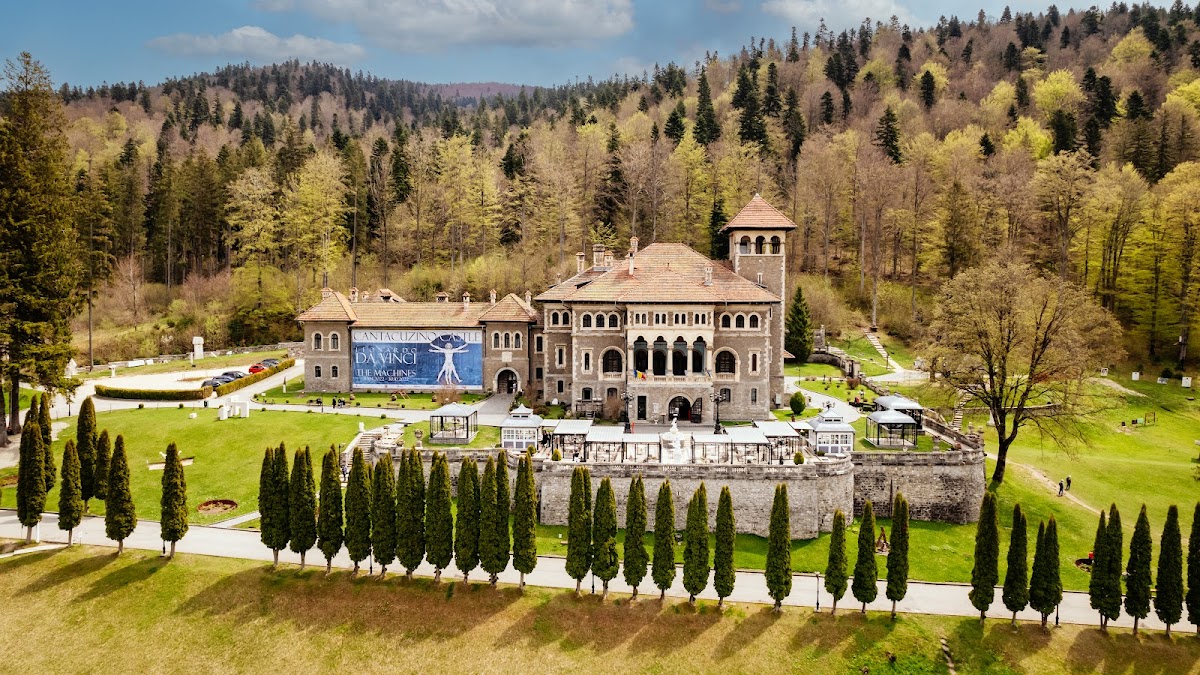
Cantacuzino Castle in Bușteni, Prahova County, is one of the finest examples of Neo-Romanian architecture in Romania. Its construction was completed in 1911 to the designs of architect Grigore Cerchez, one of the leading figures of the Neo-Romanian and Neo-Brâncovenesc styles, commissioned by Prince Gheorghe Grigore Cantacuzino (1832–1913), nicknamed "The Nabob" on account of his immense fortune. Regarded as the second wealthiest man in the country after King Carol I, the prince built the castle at the foot of Muntele Zamora, wishing, according to tradition, to symbolically rival Peleș Castle, the royal residence at Sinaia. The building, constructed in stone and brick, covers a built area of approximately 3,148 sq m and is surrounded by a park of roughly 3.5 hectares, with pathways leading to artesian fountains, cascades and a grotto, the entire estate also encompassing extensive areas of forest. The architecture blends traditional Romanian elements with Byzantine and Brâncovenesc influences — arches, loggias, stone columns with capitals and sculpted ornamentation. The interior, markedly Romantic in character, retains polychrome mosaics, stained-glass windows, exposed-beam ceilings and a heraldic collection unique in Romania, representing the coats of arms of families related to the Cantacuzinos. From the terrace facing the park, a spectacular panorama opens over the Bucegi Mountains and the Heroes' Cross on Caraiman. The castle served as the Cantacuzino family's summer residence until around the 1930s and remained in their ownership until the nationalisation of 1948, when it was converted into a sanatorium of the Ministry of the Interior. Restored and reopened to the public in the 2000s, the complex today houses a museum and an art gallery, and stands as a foremost cultural and architectural landmark of the Prahova Valley.
Strada Zamorei nr. 1, Bușteni, județul Prahova