
Attraction
Bran Castle
Bran Castle is the most visited tourist attraction in Romania — welcoming over one million tourists annually — known worldwide as "Dracula's Castle". Built between 1377 and 1388 by the Saxons of Brașov, at the command of King Louis I of Anjou, on a rock guarding the border between Transilvania and Țara Românească. The association with Dracula is, however, a literary myth: Bram Stoker never visited Romania, and Vlad Țepeș had only one connection to the castle — he was held here as a prisoner for two months in 1462. The true story of the castle is that of Queen Maria, who transformed it after 1920 into a romantic royal residence.
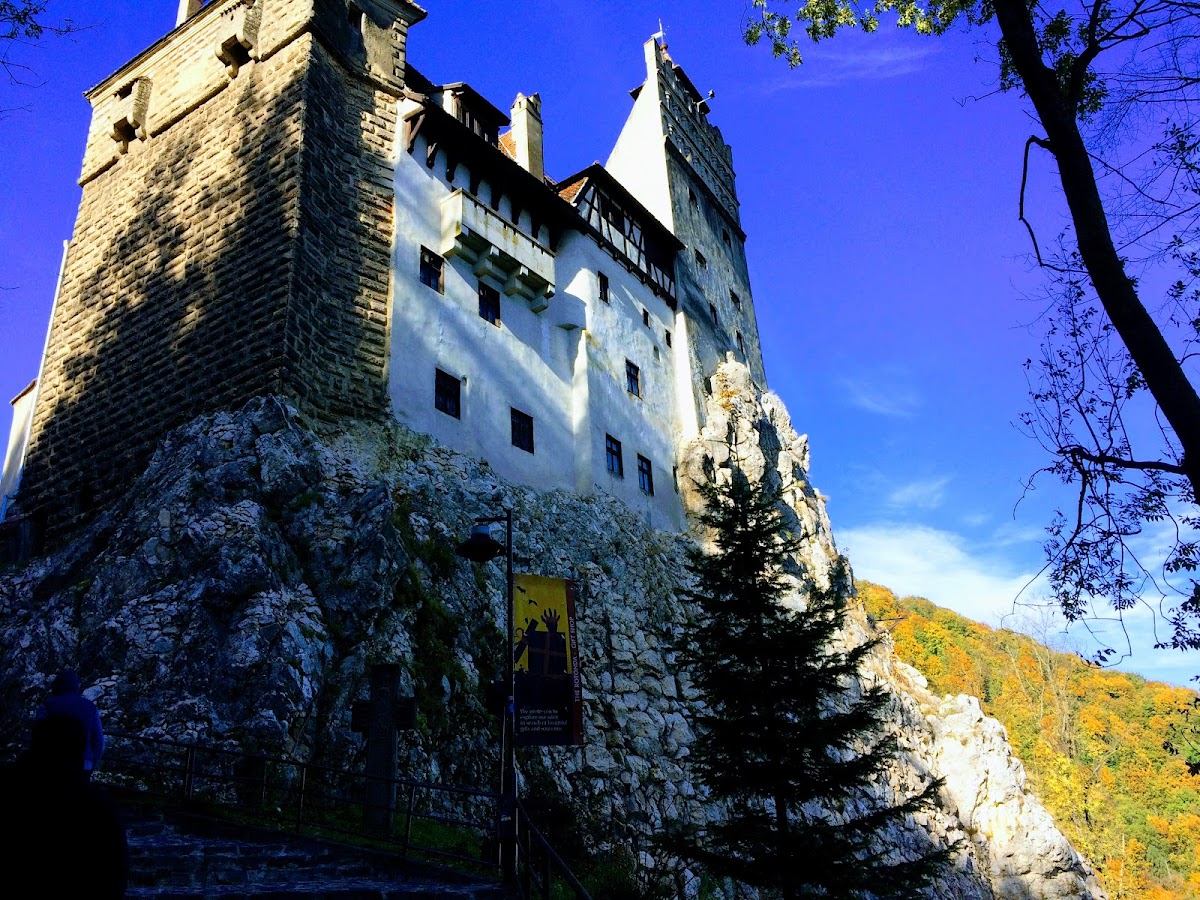
Bran Castle is a medieval fortress located in the town of Bran, Brașov County, on the historic border between Transilvania and Țara Românească, between the Bucegi and Piatra Craiului massifs. Built between 1377 and 1388 on a rock between Măgura and Dealul Cetății — an ideal position for monitoring the Bran Pass — the castle was erected by the Saxons of Kronstadt (present-day Brașov), to whom King Louis I of Anjou granted the right to build it at their own expense and with their own labour, on the site of an old wooden fortress of the Teutonic Knights. Its original role was military and customs-related: defending the border and controlling the trade route between the two principalities. The castle's worldwide fame stems from its association with "Dracula", but this is largely a literary myth. Irish writer Bram Stoker, author of the novel "Dracula" (1897), never visited Romania — he conceived the vampire count's castle based on a description of Bran Castle available in late 19th-century England, the only Transylvanian fortress that matched the setting in the novel: perched on a rock, above a precipice, in the middle of a forest. Ruler Vlad Țepeș, associated with the Dracula character through his membership of the Order of the Dragon, had only one real connection to Bran: he was held prisoner here for two months in the autumn of 1462, on the orders of King Matthias Corvinus of Hungary. The castle's true transformation is the work of Queen Maria of Romania. In 1920, the city of Brașov donated the castle to King Ferdinand and Queen Maria, and the queen transformed it from a modest medieval fortress into an elegant royal residence decorated in a romantic style, making it her favourite holiday retreat until her death. The castle has 57 rooms spread across four levels and houses collections of period furniture, artwork, and objects that belonged to the royal family. A fascinating curiosity: in the inner courtyard, a basin originally cut into the rock as a water reserve (7 m deep) was deepened in the 17th century to 59 metres, becoming a well — and Queen Maria had a lift installed in it that went directly up to the royal apartments, which she used until the last year of her life. At the foot of the castle, Queen Maria's Tea House, built between 1923 and 1929 from timber logs, operates today as a restaurant. The castle also hosts an exhibition of over 50 medieval torture instruments. Access from Brașov is via DN73, approximately 30 km away.
Strada General Traian Moșoiu nr. 24, orașul Bran, județul Brașov