
Attraction
Cascada Putnei
Cascada Putnei, also known as Săritoarea Putnei, is a nature monument declared in 1973, located on DN2D, 72 km from Focșani, near the resort of Lepșa. It impresses not through height but through the force and volume of its water — the Putna river descends 76 m along a riverbed of potholes and steps carved into rock, with a total drop of 14 m, gathering into a lake 12 m deep. A geological rarity: visitors can see a second waterfall downstream — the "fossil waterfall" — abandoned by the water after the tectonic collapse of the old riverbed, most likely following the 1802 earthquake.
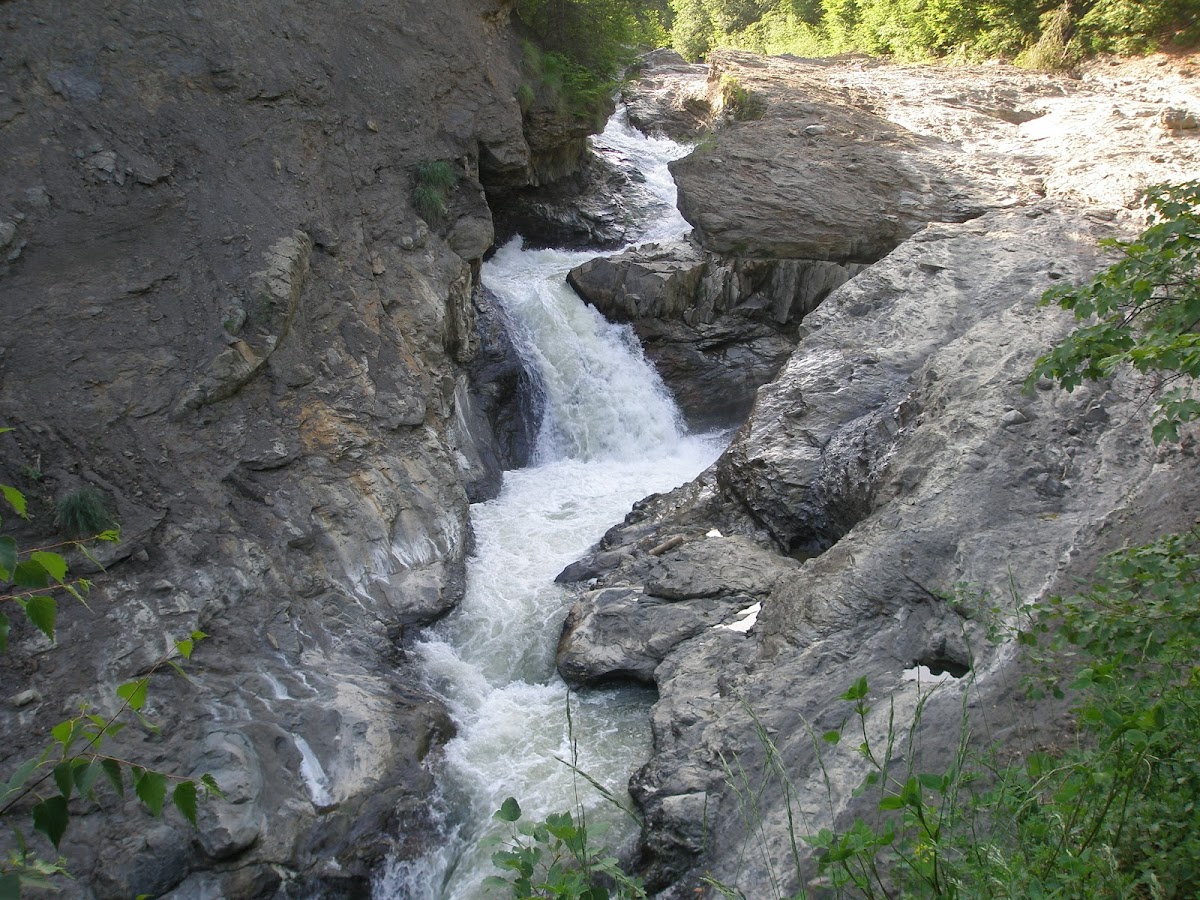
Cascada Putnei (Săritoarea Putnei) is a nationally protected area (IUCN Category IV — natural reserve of geological and scenic type), located within the commune of Tulnici, near the resort of Lepșa, Vrancea County, 72 km from Focșani on DN2D. It is the smallest reserve in the Munții Vrancei by area — 10 hectares — but one of the most visited. It was declared a nature monument in 1973, when the first tourist facilities were also developed. It is included within the Putna-Vrancea Natural Park. The waterfall's spectacle comes not from its height but from the geological form of its riverbed. The Putna river, joined by its tributary Tișița, descends in a churning rush over 76 m of potholes and steps — circular hollows carved by water vortices into the hard rock — with a total drop of 14 m, forcing the torrent to leap from one cavity to the next in a succession of partial falls. At the base of the waterfall, the water collects in a natural lake approximately 12 m deep. In winter, the waterfall partially freezes, forming spectacular ice columns across its entire height. A unique geological rarity: approximately 250 m downstream, on the left bank, a second waterfall can be seen — the "fossil waterfall" or "abandoned waterfall" — hanging in the rock face, dry and waterless. This is the trace of the old riverbed of the Putna, diverted by tectonic processes (most likely the devastating 1802 earthquake) which caused part of the river's former bed to collapse, forcing the water onto its current course. Visitors can thus admire simultaneously a living waterfall and a "fossil" one — a rare geomorphological phenomenon in Romania. Access is easy, directly from DN2D, descending a few steps fitted with a wooden handrail, with no special equipment required.
DN2D, satul Lepșa, comuna Tulnici, județul Vrancea