
Attraction
Mureșeanu House (Casa Mureșenilor)
Mureșianu House, at 25 Council Square in Brașov, is a museum dedicated to the Mureșianu family, holding collections of 19th-century manuscripts, documents, and period objects. The building once housed the editorial office of "Gazeta de Transilvania" and is where Andrei Mureșanu, a guest of his cousin Iacob Mureșianu, wrote the lyrics that became Romania's national anthem. An autonomous museum since 1998, run by the Brașov County Council, it stands as a key landmark for understanding Romania's 19th-century cultural and national movement in Transylvania.
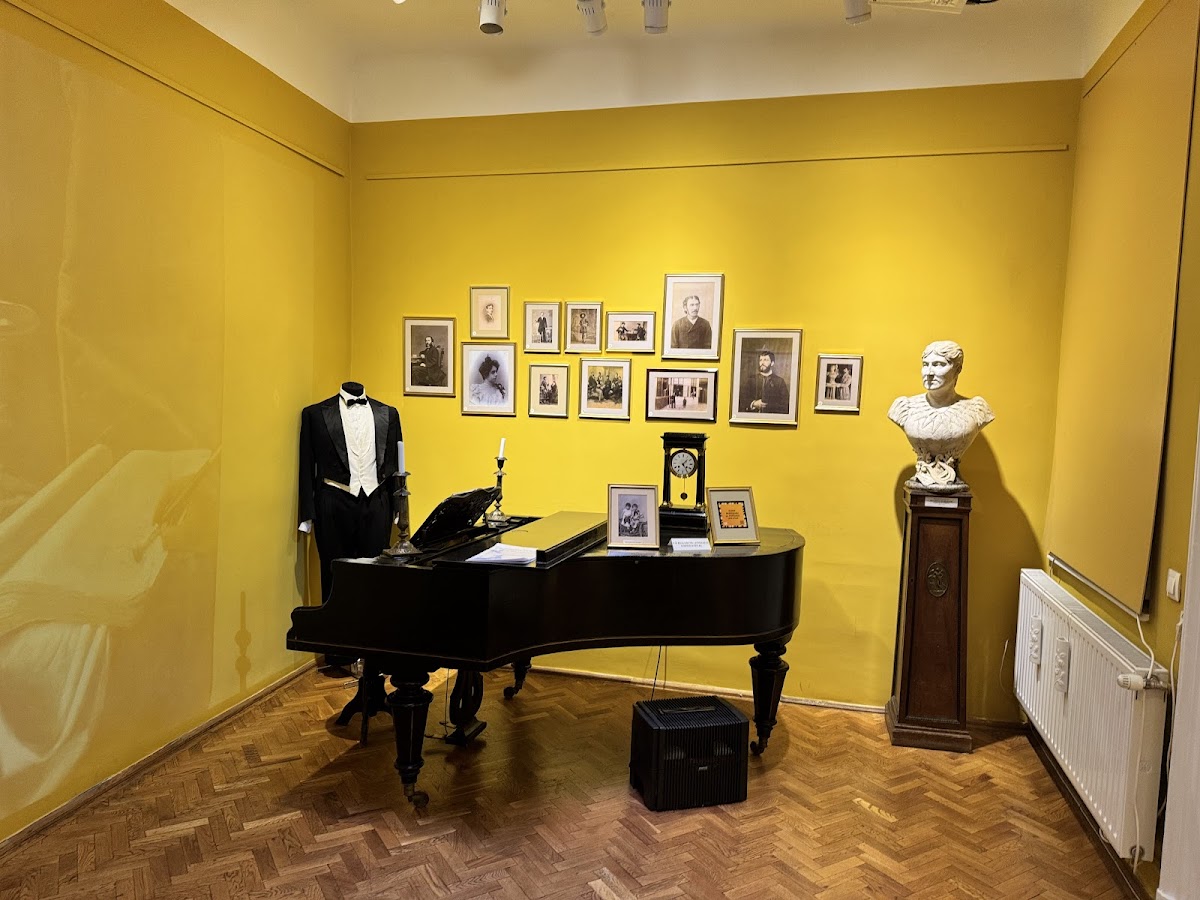
Mureșianu House is a history and culture museum located at 25 Council Square in Brașov, in a building of high historical value — a national-level historic monument, code LMI BV-II-m-A-11582 — set in the city's medieval center. The institution preserves and displays the heritage of the Mureșianu family, one of the most influential intellectual families in 19th-century Transylvania.
The house belonged to Iacob Mureșianu (1812-1887), a teacher, poet, editor, and politician, married since 1840 to Sevastia, with whom he had ten children. Here lived and worked, as a guest and cousin of Iacob, the poet Andrei Mureșanu (1816-1863), author of the lyrics to "Un răsunet," which later became Romania's national anthem, "Deșteaptă-te, române!" ("Awaken, Romanian!") — a fact that gives the building special significance in the history of Romanian culture.
The building also served as the editorial office of the newspaper "Gazeta de Transilvania," founded by George Barițiu on 12 March 1838, the first Romanian-language political daily in Transylvania. Iacob Mureșianu was its editor and owner from 1850 to 1877, and his son Aurel Mureșianu carried on his work from 1878 to 1910. The museum's collections include original documents, period Biedermeier furniture, correspondence, manuscripts, and personal items belonging to family members, illustrating Transylvania's cultural and political life during the 1848 Revolution and the Romanian national movement, as well as an art collection — paintings by Elena Mureșianu, the first professionally trained woman artist in Romanian territory, by Mișu Popp and Octav Băncilă, alongside sculptures by Traian Mureșianu.
The museum was founded in 1968, following a donation by the Mureșianu family's descendants, who thus fulfilled the cultural will of academician Iacob Mureșianu, giving the state the necessary space and an archive of over 25,000 documents — postcards, letters, period photographs, and musical scores. Since 1998, Mureșianu House has been an autonomous institution, under the Brașov County Council. Since 2006, the museum has expanded into a complex of memorial houses, with the opening of the "Ștefan Baciu House" section, dedicated to the Brașov-born poet and diplomat, at 9 G. Baiulescu Street.
It is reached directly from Council Square, within walking distance of any part of Brașov's historic center, about 500 m from Brașov railway station by public transport. Worth visiting for its direct, object-based documentation of the Mureșianu family's contribution to shaping Romanian cultural and national identity in the 19th century.
Piața Sfatului 25 Brașov