
Attraction
Unirii Boulevard
Union Boulevard, about 3.5 km long and roughly 120 m wide, is one of the most important boulevards in central Bucharest. Built starting in 1984 (originally named "Victory of Socialism Boulevard") through the demolition of an extensive historic neighborhood, it links Constitution Square — home to the Palace of the Parliament — with Union Square and Alba Iulia Square. It stands as one of the most documented examples of socialist urban planning in Eastern Europe.
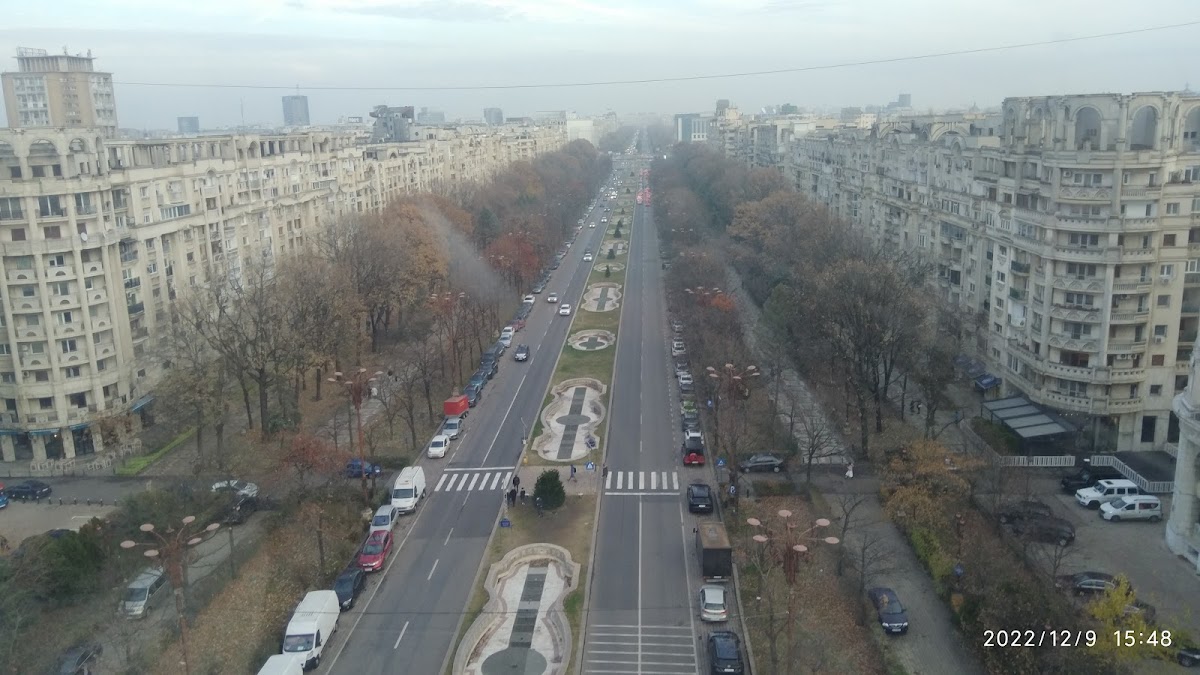
Union Boulevard is one of the most important urban arteries in central Bucharest, conceived in the 1980s as the central axis of the new Civic Center, part of the systematization project of Nicolae Ceaușescu's regime, officially launched under the pretext of repairing damage from the 1977 earthquake. Construction began on 25 June 1984, under the original name "Victory of Socialism Boulevard"; the current name was adopted after 1990. Ceaușescu wanted the boulevard to outsize Paris's famous Champs-Élysées.
The boulevard is about 3.5 km long and roughly 120 m wide. Its construction required demolishing an extensive historic neighborhood — including Brâncovenesc Hospital, the "Mina Minovici" Forensic Institute, Albă-Postăvari Church, and other landmarks — and displacing tens of thousands of residents, over an area estimated at several hundred hectares of the old city center.
The boulevard starts at Constitution Square, home to the Palace of the Parliament — the world's second-largest administrative building by floor area, after the Pentagon —, runs through Union Square, and ends at Alba Iulia Square, where the unfinished foundations of a national theater planned by Ceaușescu remained visible even after 1989. Its central axis is flanked by apartment blocks and public buildings in socialist neoclassical style, with fountains, green spaces, and pedestrian paths along the median. It is reached by metro at Piața Unirii station (lines M1 and M3), or by surface public transport. Worth visiting for its urban scale and its significance as one of the most thoroughly documented examples of socialist-era architecture in Eastern Europe.
Bulevardul Unirii Bucuresti