
Attraction
St. Elizabeth Roman Catholic Church and Minorite Friary, Aiud
A Baroque church and Minorite friary in the centre of Aiud, next to the citadel. The church was built between 1745 and 1757 and consecrated to St. Elizabeth of Hungary, and the ensemble is a category A historic monument.
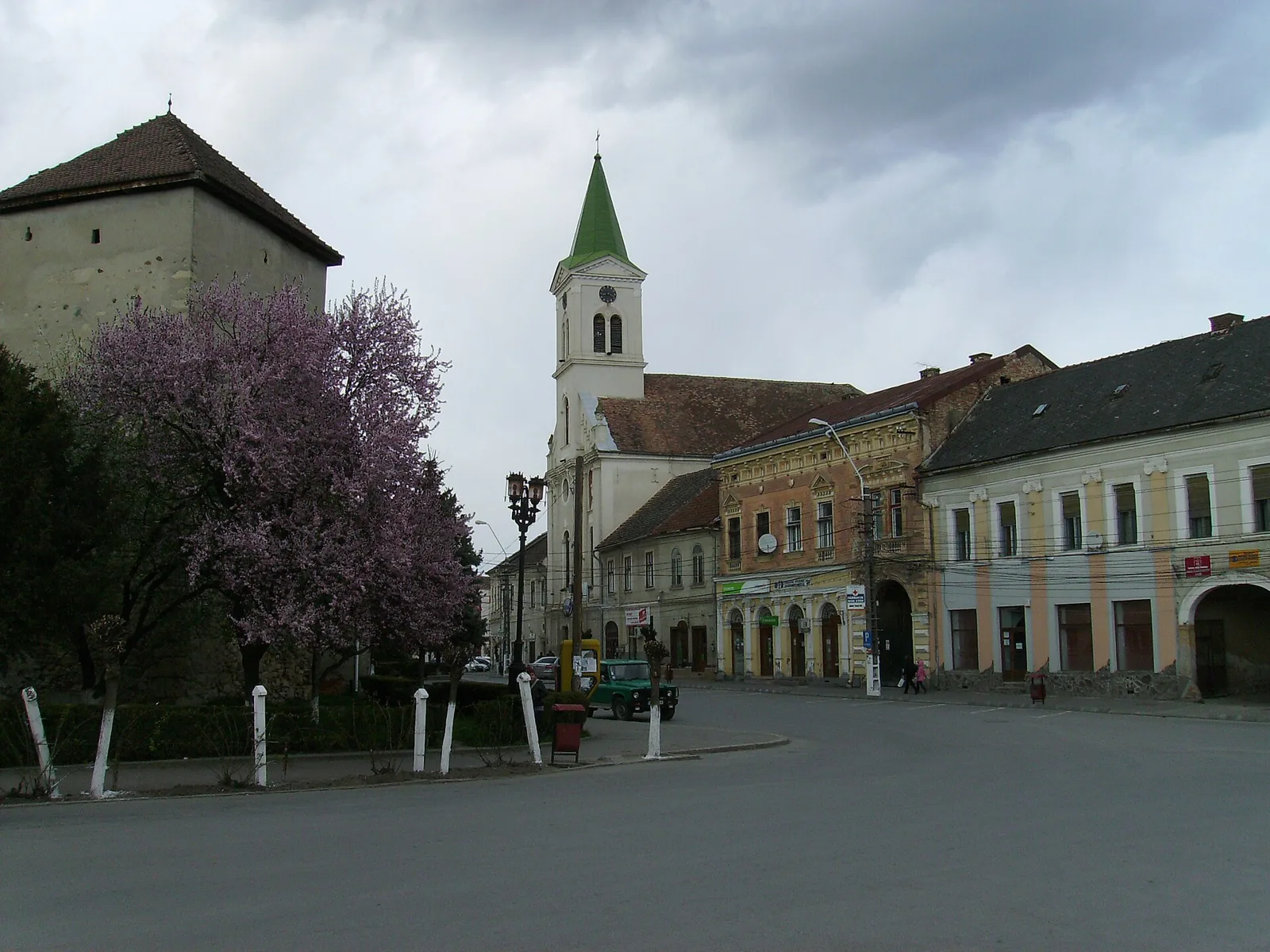
Foto: Brgh, CC BY-SA 3.0, via Wikimedia Commons
The Roman Catholic Church of St. Elizabeth and the friary (cloister) of the Minorite friars stand in the centre of Aiud, at 3 Cuza Vodă Street, on the north-eastern side of the main square, next to the medieval citadel. Today the church serves the Roman Catholic parish of Aiud, part of the Roman Catholic Archdiocese of Alba Iulia.
The first Minorite friar, Jánosi Mór, arrived in Aiud on 19 February 1727 with the support of Count István Kornis; he bought a house and set up a chapel. The present Baroque church was begun in 1745 by the superior Bíró Gáspár and consecrated in 1757 to St. Elizabeth of Hungary. For lack of money the tower was left at roof height and was only completed in 1896, with support from Tivadar Kowrig. A school opened in the church courtyard in 1753, and work on the friary building began in 1812. In 1849 a fire destroyed the organ and badly damaged the church and friary, which were restored in 1853 by the superior Henrik Wiszkóczi. The stained-glass windows were made in 1920 by Italian craftsmen in Budapest.
The church is 41 m long and 15 m wide. On the facade, two niches hold statues of the kings St. Stephen and St. Ladislaus. The high altar was made by Ágoston Billinger and Farkas Stegner, and the pulpit came from a lost church in Alsóorbó (Gârbova de Jos). The Rococo side altars were brought from the Minorite church in Cluj, which became the Greek Catholic cathedral in 1924. The organ was built in 1853 by István Kolonics, his first work in Transylvania. The church can be seen during services and is an easy walk from the town centre.
The Minorite friary ensemble is a category A historic monument, LMI code AB-II-a-A-00173, comprising the church (AB-II-m-A-00173.01) and the cloister (AB-II-m-A-00173.02).
Did you know that the high altar painting of St. Elizabeth is by the Austrian Baroque painter Franz Anton Maulbertsch? It was bought in Vienna with money given by Count György Haller and Countess Borbála Csáky.
Strada Cuza Vodă nr. 3, municipiul Aiud, județul Alba