
Attraction
Annunciation Church (Church in the Ditch), Sibiu
The Annunciation Church, known locally as the "Church in the Ditch," on Justiției Street no. 5 in Sibiu, is one of the city's first Romanian Orthodox churches, built in 1788-1789 and rebuilt in 1802-1803 after an earthquake. It is a small hall-type church, with a three-level west tower and a simple facade with Doric-influenced pilasters. The surrounding cemetery holds the graves of several key figures in Transylvanian Romanian culture. Worth visiting for its well-documented historical value, as one of the first Romanian churches built in Sibiu under Habsburg administration.
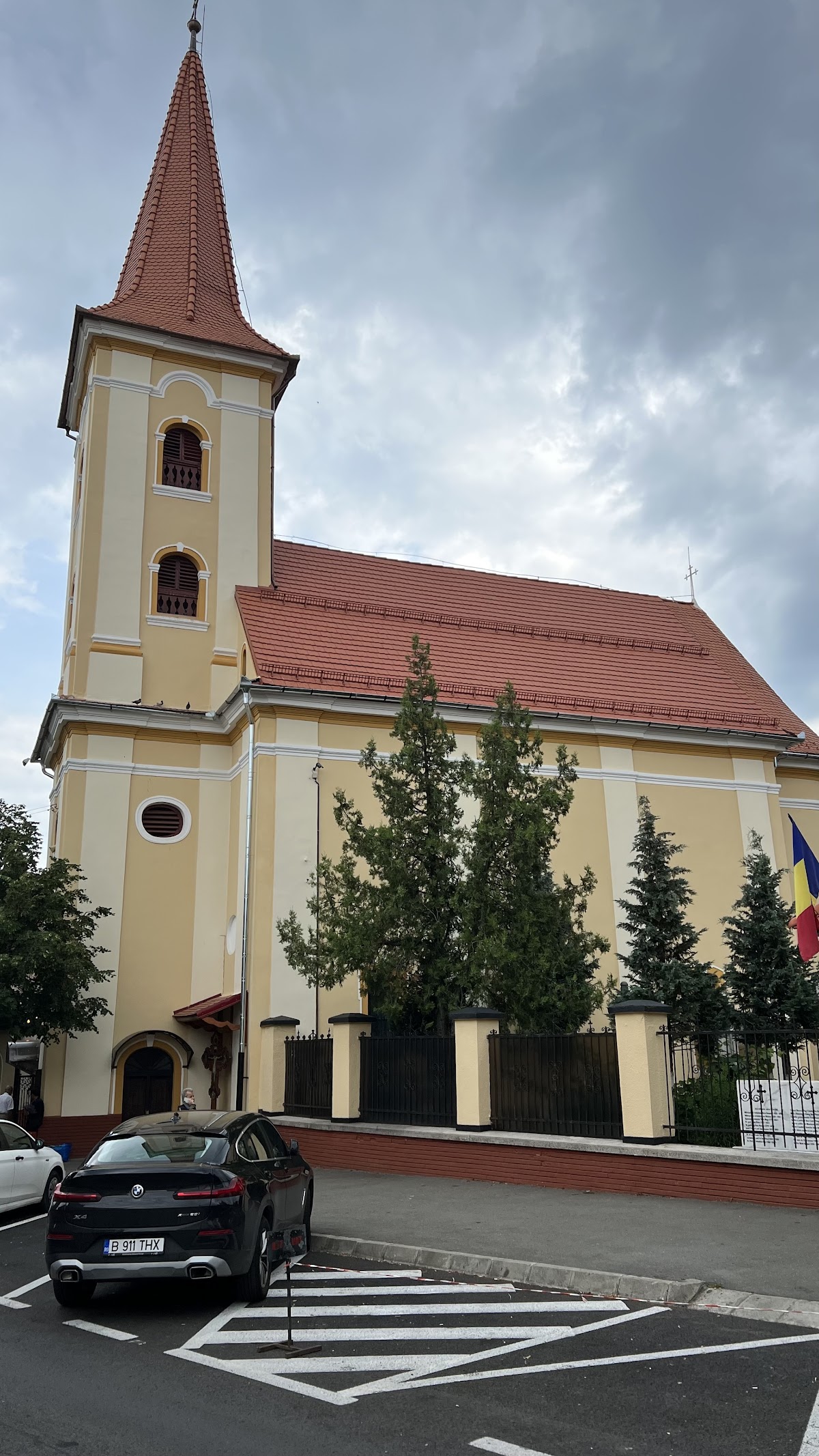
The Annunciation Church in Sibiu, popularly known as the "Church in the Ditch" (Biserica din Groapă), is one of the city's first Romanian Orthodox churches, located at 5 Justiției Street, in the Iosefin district. It was built in 1788-1789, funded by the widow Stana Hagi Petru Luca, taking advantage of rights granted to other faiths' believers under Emperor Joseph II's 1781 Edict of Toleration — which is why Sibiu's first Romanian churches were built extra muros, outside the citadel walls, since the Saxon patriciate retained the privilege of intra muros locations.
The popular name, "Church in the Ditch," comes from its location in the valley of the Trinkbach stream, at a lower elevation than the rest of the city. In October 1802, an earthquake partially destroyed the original building, and the church was completely rebuilt, from the foundations up, in 1802-1803, funded by Stana's son-in-law, Aromanian merchant Constantin Hagi Popp. The building is a small hall-type church, with a semicircular apse and a three-level tower above the porch; the only decorative elements on the facade are pilasters with Doric capitals. The interior, painted in 1961 by Nicolae Brana, preserves on the gallery balustrade the oil-painted portraits of the three founders — Stanca Hagi Luca, Constantin Hagi Popp, and Peuna Hagi Popp — later flanked by portraits of Metropolitans Ioan Mețianu and Antonie Plămădeală.
The church was surrounded by the Orthodox community's cemetery, one of Sibiu's most culturally and historically important. Buried here are figures such as Vasile Moga (1774-1845), the first Orthodox bishop of Transylvania; Metropolitans Miron Romanul and Ioan Mețianu; writers Zaharia Boiu and Ioan Codru Drăgușanu; physician and philologist Ioan Piuariu Molnar, author of the first Romanian-German grammar; and lawyer-poet Vasile Aaron. The oldest surviving grave dates from 1813.
The complex — the church, the parish house (from the late 18th century), and the cemetery — is listed on Sibiu County's list of historic monuments (code SB-II-a-A-12085). After repair and modernization work carried out in 1991, the church was reconsecrated in 1998 by Metropolitan Antonie Plămădeală of Transylvania. The feast of the Annunciation is celebrated on 25 March. Worth visiting for its well-documented historical value, as one of the first Romanian Orthodox churches built in Sibiu under Habsburg administration, and for its cemetery, home to a significant part of the city's Romanian cultural memory.
Strada Justitiei 2 Sibiu judetul Sibiu