
Attraction
Calvaria Church, Cluj-Mănăștur
The Roman Catholic Calvaria Church, on Calvaria hill in the Mănăștur district, is what remains of the Benedictine abbey of St. Mary, founded in the second half of the 11th century. The Gothic choir of the medieval church survives, and the earth ramparts of the old fortification can still be seen around it.
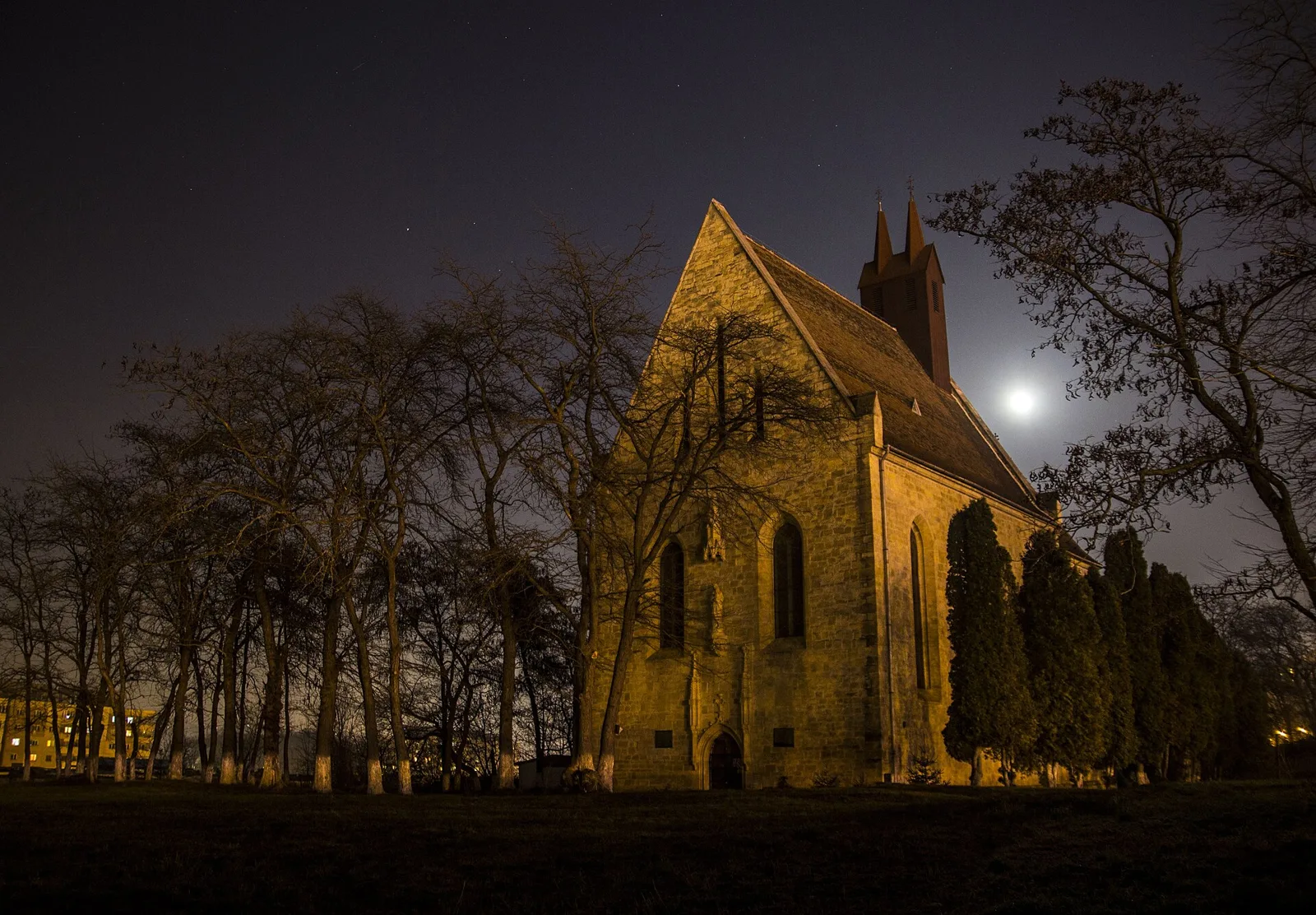
Foto: Pan Ioan, CC BY-SA 4.0, via Wikimedia Commons
Calvaria Church, dedicated to St. Mary, stands on Calvaria hill in the Mănăștur district of Cluj-Napoca, at 60 Primăverii Street, in the west of the city. It is the oldest surviving monument of the former village of Cluj-Mănăștur. There is no monastery here today: the building is a Roman Catholic church.
An earthwork fortification of the 9th-11th centuries stood on the hill, and inside it was the Benedictine abbey "Monasterium Beatae Mariae de Clus". Medieval tradition, recorded in 1341, places the founding of the abbey in the second half of the 11th century, under King Ladislaus I of Hungary; the first document mentioning it is a papal bull of 1222. The abbey was badly damaged in the Tatar invasion of 1241 and rebuilt in 1263. From at least 1288 until 1556 the convent was a place of authentication for legal documents, one of the most important in Transylvania. In 1437, during the Bobâlna peasant revolt, the abbey was attacked, and agreements between the rebels and the nobility were also negotiated here. After secularisation in 1556 the site passed to the Jesuits in 1581. Destroyed again in 1658-1661, the church was largely demolished in the early 19th century (from 1818, with the consent of Bishop Sándor Rudnay, its stones being used to build the Royal Lyceum); only the choir survived, turned into a chapel in 1819. The present nave was rebuilt in 1896.
Today you can see the Gothic choir of the medieval church, with a 19th-century nave built on the old foundations. A relief of a lion is set into the south-east side. The church is surrounded by a high earth rampart, the trace of the oval medieval fortification. Access is through the south-east corner of the hill, between the ramparts, where the Calvaria Chapel (1831) and a bell tower designed by Károly Kós in 1922 stand. The hill can be reached by tram (Calvaria stop, on Primăverii Street). The church has been used by the Roman Catholic Church since 1994.
Calvaria Church is a category A historic monument, code CJ-II-m-A-07396. The "Calvaria" archaeological site (ruins of the medieval church and the fortified settlement of the 9th-11th centuries) has code CJ-I-s-B-06924.
Did you know that the church holds the gravestone of the Jesuit Thaddäus Manner, from Wiener Neustadt? Its Latin inscription says that he served at Mănăștur among the Romanians and learned their language "with tireless labour".
Strada Primăverii 60, cartierul Mănăștur, Cluj-Napoca, județul Cluj