
Attraction
Weavers' Bastion (Bastionul Țesătorilor), Brașov
The Weavers' Bastion in Brașov, built by the linen weavers' guild in two stages (1421–1436 and 1570–1573), is the best-preserved bastion of the medieval citadel. Hexagonal in shape, with four levels of oak wooden galleries and walls up to 4 m thick, it was spared by the great fire of 1689 and keeps its original architecture. It houses a museum whose centrepiece is the scale model of the old Brașov citadel, made in 1896.
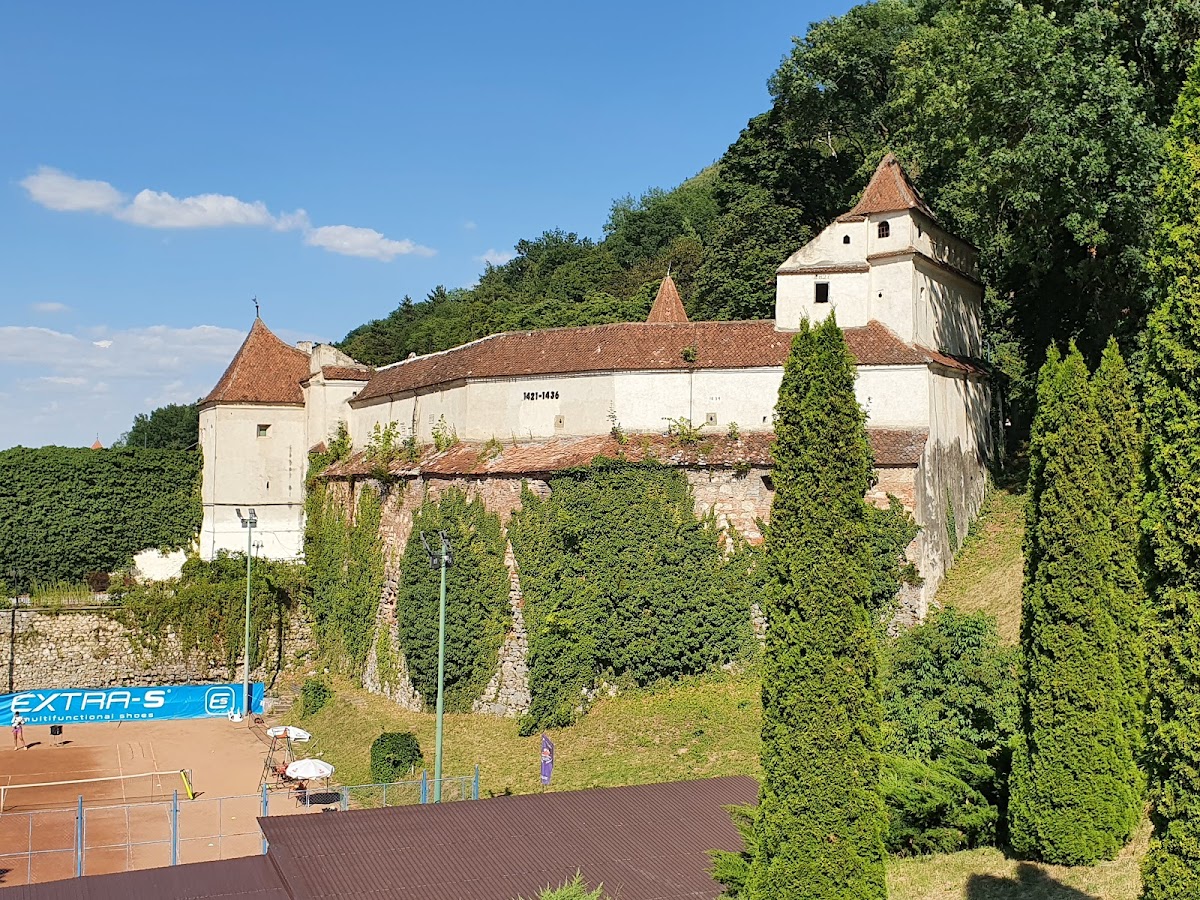
The Weavers' Bastion is the best-preserved and most spectacular defensive structure of medieval Brașov, located in the south-western corner of the citadel, at the foot of Tâmpa, on Strada George Coșbuc. It was built, defended and maintained by the linen weavers' guild, under the system in which each guild was responsible for a section of the walls. Construction took place in two stages: the first levels were raised between 1421 and 1436, and the upper galleries were added between 1570 and 1573.
Hexagonal in shape, the bastion encloses an area of about 1,616 m², with walls reaching roughly 4 m thick at the base and two watchtowers. Along the inner walls run oak wooden galleries on three to four levels, fitted with loopholes, embrasures and pitch holes — an architecture considered unique in south-eastern Europe. As one of the few structures spared by the great fire of 1689, the bastion has kept its original form.
From the early 20th century, the bastion was restored and turned into a museum, today a branch of the Brașov County History Museum. The exhibition presents the history of the citadel's fortifications and those of the Burzenland, through weaponry, wall fragments and documents, but its best-known piece is the 1:200 scale model of the old Brașov citadel, made in 1896 by professor Friedrich Hermann, alongside a model of the Șchei district. Thanks to its remarkable acoustics, the inner courtyard hosts concerts and cultural events in summer. The bastion is worth visiting for its unique defensive architecture, the historic model of the city and the atmosphere of its courtyard with wooden galleries.
Strada Coșbuc Brașov