
Attraction
Techirghiol Cold Baths
The Cold Baths are the shoreline bathing area on Lake Techirghiol, facing the Balneal and Recovery Sanatorium, where visitors coat themselves in sapropelic mud, let it dry in the sun, then wash it off in the lake's hypersaline water. It is the oldest form of mud treatment practised here, in use since the 19th century. Techirghiol mud won a gold medal at the 1924 Paris Universal Exposition. The season runs from May to September, and the therapy carries medical contraindications.
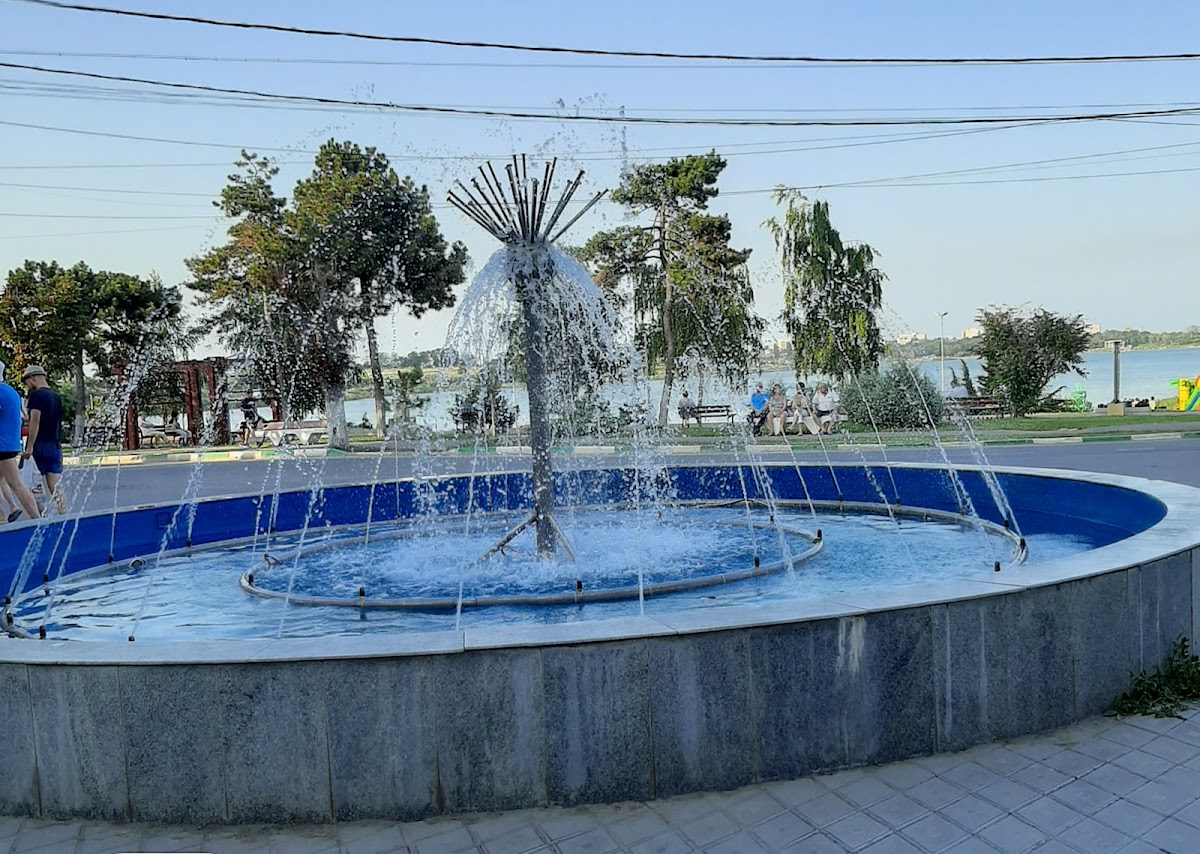
The Cold Baths lie in the town of Techirghiol, Constanța County, on the western shore of Lake Techirghiol, about three kilometres from the Black Sea coast. They are laid out directly in front of the Techirghiol Balneal and Recovery Sanatorium, the institution that runs them.
The procedure is simple and old. The visitor coats their body in black mud drawn from the lake, lets it dry in the sun, then enters the hypersaline water to wash it off. Doctors call it contrast therapy and count it among the most beneficial forms of application for analgesic, anti-inflammatory, and metabolic stimulation purposes. It is the first and oldest method of mud treatment practised at Techirghiol, in use since the 19th century.
The lake's sapropelic mud made this place famous. In 1924, at the Paris Universal Exposition, it was awarded a gold medal. It lies deposited on the lake bed, in certain zones, over a total area of roughly 98 hectares, in a layer about 0.6 metres thick. It is black as tar, glossy, unctuous, with a distinctive smell. It forms through peloidogenesis, an extremely long biological process, from the bacterial decomposition of the brine shrimp Artemia salina together with the alga Cladophora, under the lake's hypersaline conditions.
Its physical properties explain its effectiveness. It is plastic, spreading and moulding to the surface of the body. It is hydropexic, absorbing water like a sponge and mixing readily with it. It is thermopexic, storing heat easily and releasing it slowly to the body, having low thermal conductivity; applied hot to the skin, it therefore feels less warm than a bath of water at the same temperature.
The Techirghiol Balneal and Recovery Sanatorium is the only institution holding a licence to extract mud from the lake. It supplies it exclusively to treatment facilities, under contract, with a binding clause requiring the mud's return to the lake under strict supervision. The sanatorium publicly warns that it accepts no responsibility for commercial products claiming to be based on Techirghiol mud.
The Cold Baths have separate sectors for women and men, plus a mixed sector. Facilities include showers with lake water, hot-water showers, sunbeds, parasols, a permanent medical post, and lifeguards. Access is open to sanatorium inpatients as well as to tourists and locals. Children under fourteen enter free. The season usually opens in May and runs to September.
The therapy carries contraindications. It is contraindicated for patients with cardiovascular and neurological conditions not stabilized by medication, and in any febrile syndrome. Medical staff are present at all times, and in case of doubt visitors may be examined at the sanatorium. If you have a chronic condition, speak with your doctor before taking mud baths.
The sanatorium holds one of Romania's most modern balneo-physical-kinetic treatment facilities, able to treat up to a thousand patients a day. Techirghiol has more than one hundred and twenty-seven years of documented balneology.
In the centre of town stands the statue of Techir with his donkey, the figures of the legend that gave the place its name. In a quiet corner rises the Saint Mary Monastery, with a small wooden church brought from Maramureș in 1951 and a museum of Dobrujan Christianity.
The Cold Baths are worth visiting because they are one of the few places in Europe where a scientifically validated medical treatment is still practised exactly as it was a hundred and thirty years ago: by hand, on the lakeshore, under the sun. The sight of dozens of black silhouettes drying in the sun resembles nothing else on the Romanian coast.
Techirghiol judetul Constanta