
Attraction
Babadag Town
Babadag is a town in Northern Dobruja, on the road between Tulcea and Constanța, named after the dervish Sarı Saltuk Baba. Its centre keeps the Ali Gazi Pasha Mosque, the tomb of its founder, the Panaghia House (now the Museum of Oriental Art) and the mausoleum of Sarı Saltuk.
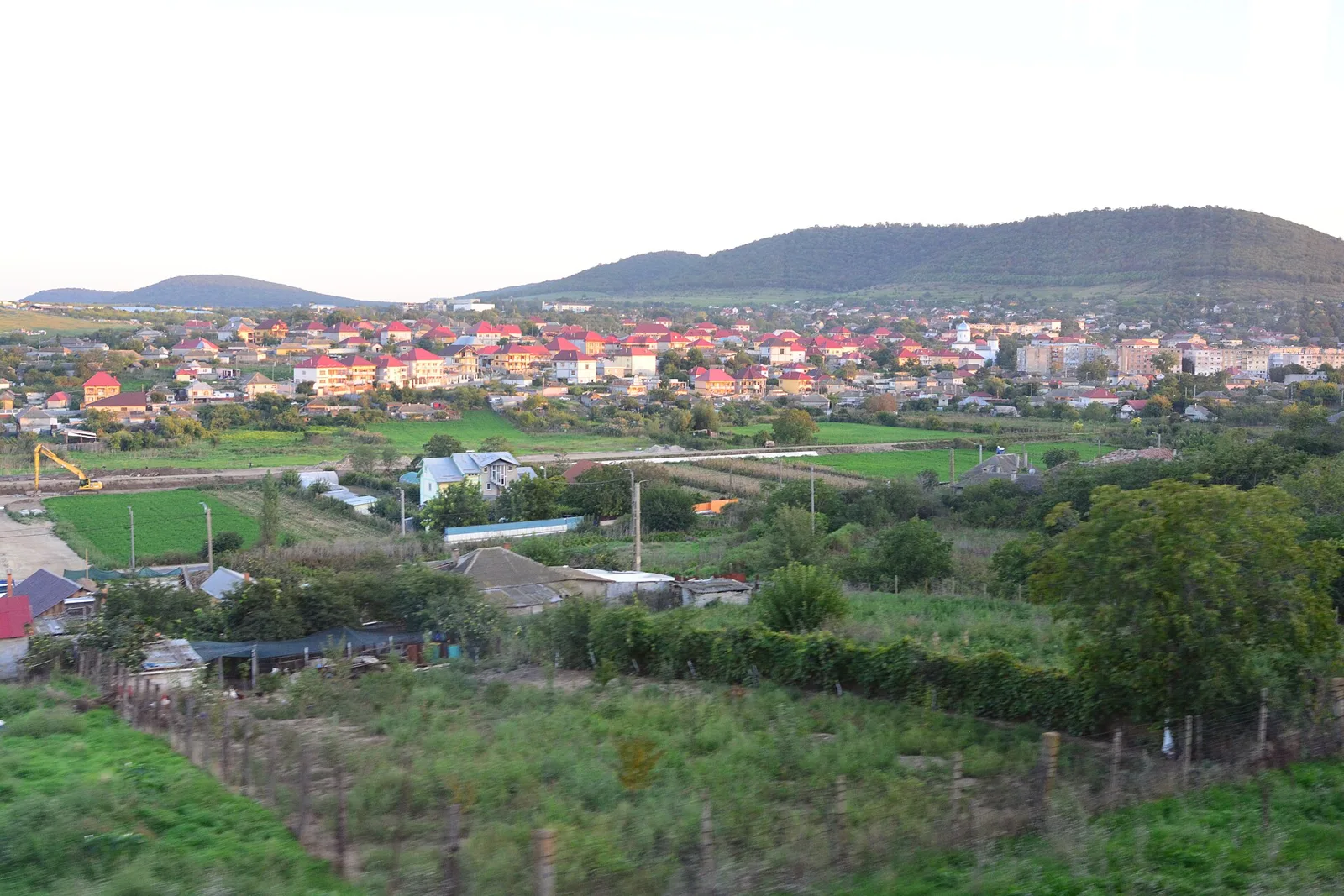
Foto: Joe Mabel, CC BY-SA 4.0, via Wikimedia Commons
Babadag is a town in Tulcea County, Northern Dobruja, lying in the valley of the Tabana stream between wooded hills up to 250 m high. Lake Babadag stretches to the north-east, and Lake Razim beyond it. The European road E87, linking Tulcea and Constanța, runs through the town. The 2021 census counted 9,213 inhabitants, about one fifth of them Muslims.
A Roman settlement named Vicus Novus, known from an inscription of the year 178, stood on the town's territory. The Turkish name Babadağ ("Father Mountain") is linked to the dervish Sarı Saltuk Baba, who, according to tradition, brought a group of Turkomans here in the 13th century. The traveller Ibn Battuta mentions the place in the 1330s as Baba Saltuk. The town was conquered by Sultan Bayezid I in 1393, and in 1538 Sultan Suleiman the Magnificent stopped here and visited the tomb of Sarı Saltuk. In 1677-1678 the residence of the pasha was moved from Silistra to Babadag, which for a time became the most important administrative centre of Dobruja. In 1854, during the Crimean War, the town was bombarded by the Russians, and after the war of 1877-1878 it became part of Romania.
Almost all the monuments are in the centre. The Ali Gazi Pasha Mosque, at 2 Geamiei Street, is a stone mosque from the first decades of the 17th century, with an arcaded porch and a minaret over 20 m high; the founder's tomb, dated 1620, stands in the courtyard. Next to it, the Panaghia House, built in 1837 in the old Babadag style, houses the Museum of Oriental Art of the Tulcea Eco-Museum Research Institute, with textiles, embroidery, costumes, jewellery and copper vessels of the Turks and Tatars of Dobruja. The mausoleum of Sarı Saltuk Baba stands at 11, 1 Decembrie 1918 Street and is visited by Muslim pilgrims. Enisala Fortress lies about 8 km away, on a rocky hill above Lake Razim.
The List of Historic Monuments includes, among others, the Ali Gazi Pasha Mosque (TL-II-m-A-06000), the Panaghia House (TL-II-m-A-06001), the tomb of Ali Gazi Pasha (TL-IV-m-A-06041), the tomb of Sarı Saltuk (TL-IV-m-B-06042) and the 19th-century urban site on Zânelor, Ștefan cel Mare, Dr. Boteanu and Col. Andoniu streets (TL-II-s-B-06002).
Did you know that a whole archaeological culture bears the town's name? The Babadag culture of the Early Iron Age (Hallstatt, 11th-7th centuries BC) was named after the settlement at Babadag, listed among the historic monuments as "the eponymous settlement of the Babadag culture" (TL-I-m-A-05734.04). Babadag also has a Turkish legend: a shepherd called Koyun Baba ("father of the sheep") is said to have found the tomb of Sarı Saltuk after noticing that his sheep always walked around the same spot.
Orașul Babadag, județul Tulcea