
Attraction
Historic Monument "Piața Unirii Ensemble"
The Unification Monument in Focșani commemorates the act of 24 January 1859 by which Moldova and Țara Românească united under the rule of Alexandru Ioan Cuza. Focșani was the only city in Romania physically divided by the border between the two principalities — the border ran along what is now Cuza Vodă Street, through the middle of the town. The ensemble includes a 16 m obelisk clad in red granite, the work of sculptor Ion Jalea, with a bronze torus at its base depicting 85 figures from the history of the Union, including Moș Ion Roată.
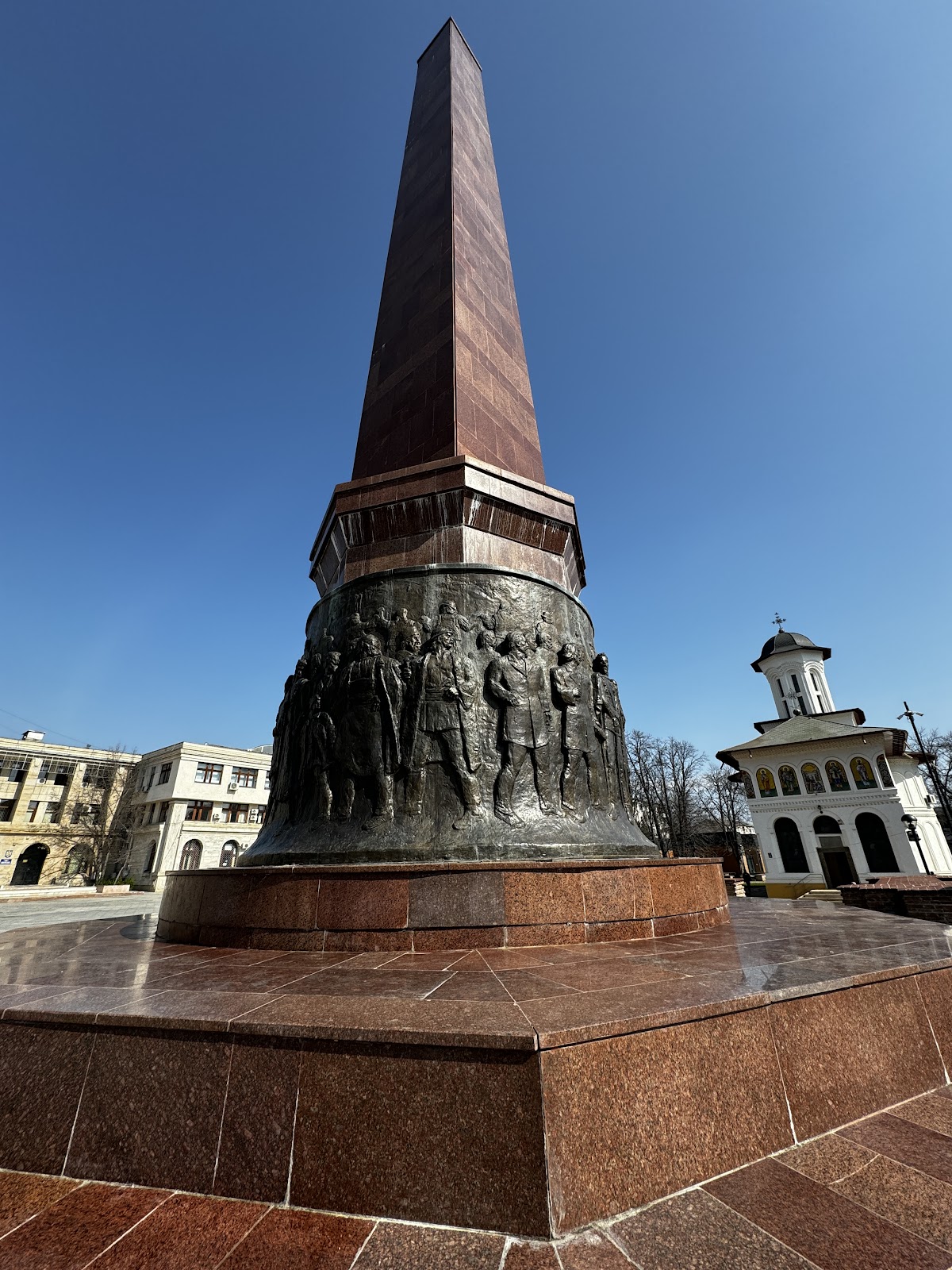
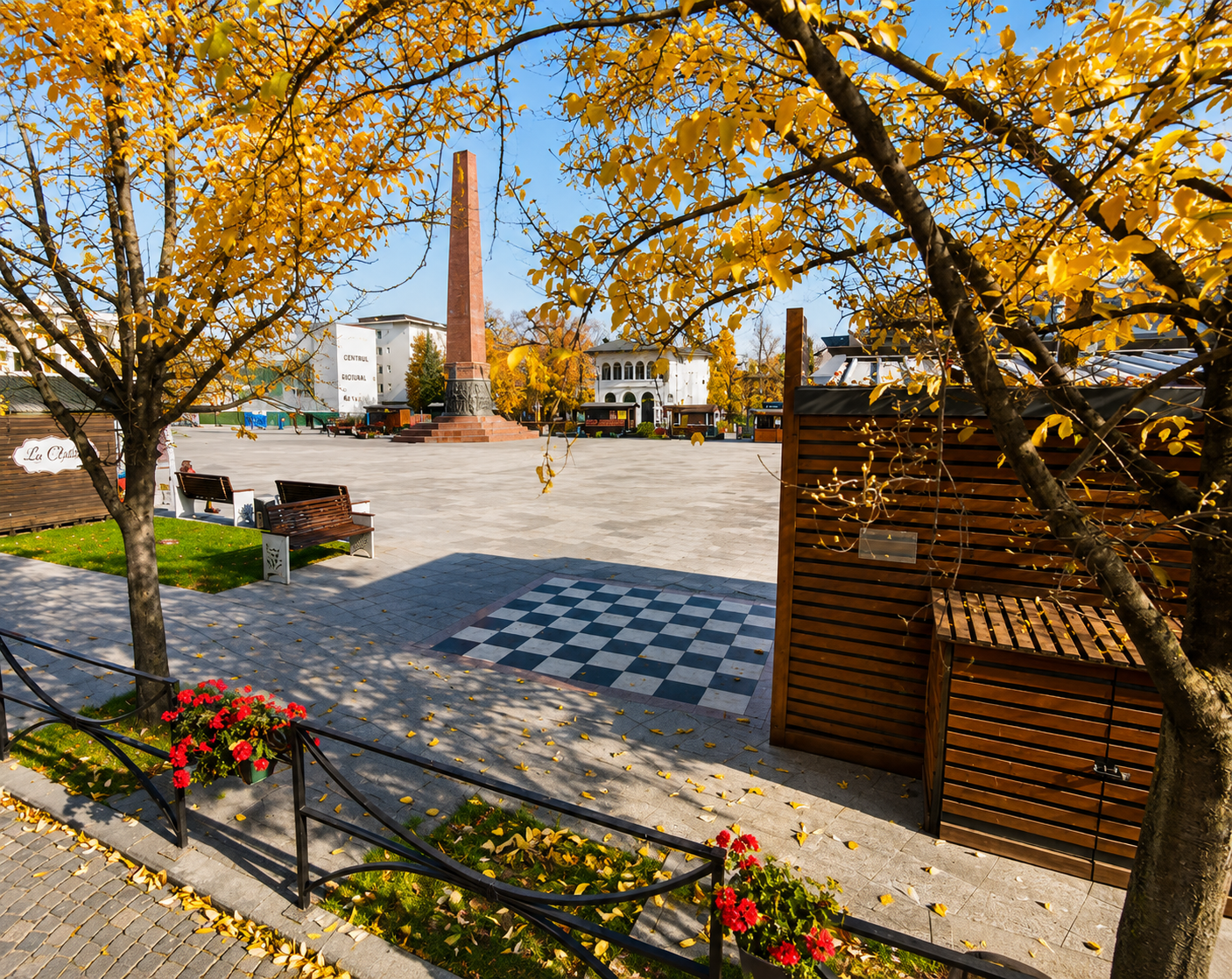
The Unification Monument in Focșani is located in Piața Unirii in the centre of the municipality of Focșani, on the exact site of the former border between Moldova and Țara Românească — a border that ran through the middle of the city, along what is now Cuza Vodă Street, dividing Focșani into "Focșanii Munteniei" and "Focșanii Moldovei". This distinctive feature makes Focșani the only Romanian city that was physically divided between two states and reunified by the very political act the monument commemorates. The administrative unification of the two halves of the city took place on 10 July 1862, when ruler Alexandru Ioan Cuza signed the unification decree in București. The central obelisk, the work of a collective of sculptors led by Ion Jalea — one of the greatest Romanian sculptors of the twentieth century — was designed in 1975 and inaugurated subsequently. It stands 16 m tall, is clad in red granite, and rises on an octagonal base of three steps, also clad in red granite, measuring 1.4 m in height. The octagonal base was deliberately chosen to allow circulation on all levels and the performance of traditional circle dances on festive days — a design detail reflecting the intention to make the monument a living space rather than a purely decorative one. At the base of the obelisk stands a bronze torus 2.24 m tall, on which approximately 85 figures are sculpted depicting scenes from the history of the Union of the Principalities: in the foreground, supporters of the Union, including Moș Ion Roată; in the second plane, the Hora Unirii; and in the background, historical scenes. On the northern face, among oak leaves, there is a bronze shield. Piața Unirii also contains the Boundary Marker — the stone that demarcated the border between the two principalities — and the Ateneul Popular "Maior Gheorghe Pastia", the city's theatre, built between 1909 and 1915. The Piața Unirii Ensemble is a classified historic monument (LMI code VN-III-m-B-06579). Access is on foot from the centre of Focșani; the city lies 170 km north-east of București on the A7 and DN2.
Focsani judetul Vrancea